
How to Use AI to Grow on X Without Sounding Like a Bot
You can use AI to grow on X without sounding like a bot by training tools to clone YOUR authentic voice from your existing tweets, detecting patterns in what already works for YOUR audience, and strategically automating only the repetitive tasks while keeping the human elements that build real connections. The key isn't avoiding AI—it's teaching AI to sound exactly like you.
📊 Key Points
- •
Modern AI platforms now allow you to create custom presets that encode your unique writing style, perspective, and voice rather than relying on generic templates that make everyone sound the same
Source: XBeast - •
AI tools are designed to sharpen your voice and help build consistent identity rather than replace it—the goal is to speed up your output while maintaining the authenticity that makes people actually want to follow you
Source: Growth Terminal - •
X's open-sourced algorithm gives developers the ability to reverse-engineer growth strategies, enabling you to understand what actually drives reach instead of guessing what the algorithm wants
Source: Piunika Web
You've tried using AI to write your X posts. And you immediately felt it, didn't you?
That sterile, over-enthusiastic tone. Those perfectly structured sentences that somehow sound like every other "growth hacker" in your timeline. The emoji placement that screams "I used ChatGPT." You deleted the draft because you'd rather spend 30 minutes writing something real than 30 seconds posting something fake.
Here's the painful truth: most creators using AI on X are actually hurting their growth. They're flooding the platform with generic content that sounds exactly like everyone else's generic content. Their engagement drops. Their replies feel hollow. And worst of all? They're spending money on AI tools that make them less authentic, not more.
But here's what almost no one talks about: the problem isn't AI itself—it's using AI wrong.
The creators who are winning with AI aren't using it to replace their voice. They're using it to amplify what already works. They're teaching AI to sound like them by feeding it hundreds of their own tweets. They're using pattern detection to find their winning content DNA instead of copying someone else's viral formula. And they're strategically automating the repetitive stuff (thread formatting, reply variations, content scoring) while keeping the human moments that actually build trust.
This is where tools like PatternMentor are changing the game—by actually learning YOUR voice from 500+ of your tweets and detecting patterns in what YOUR specific audience responds to, not what worked for some guru with 500K followers. At $19/month, it's built specifically for solopreneurs who want AI that makes them sound more like themselves, not less.
In this guide, you'll learn exactly how to set up AI systems that enhance your authenticity instead of destroying it. No more robotic posts. No more cookie-cutter content. Just faster creation of the posts your audience already loves.
Why Your AI-Generated X Posts Sound Like Every Other Bot (And How to Fix It)
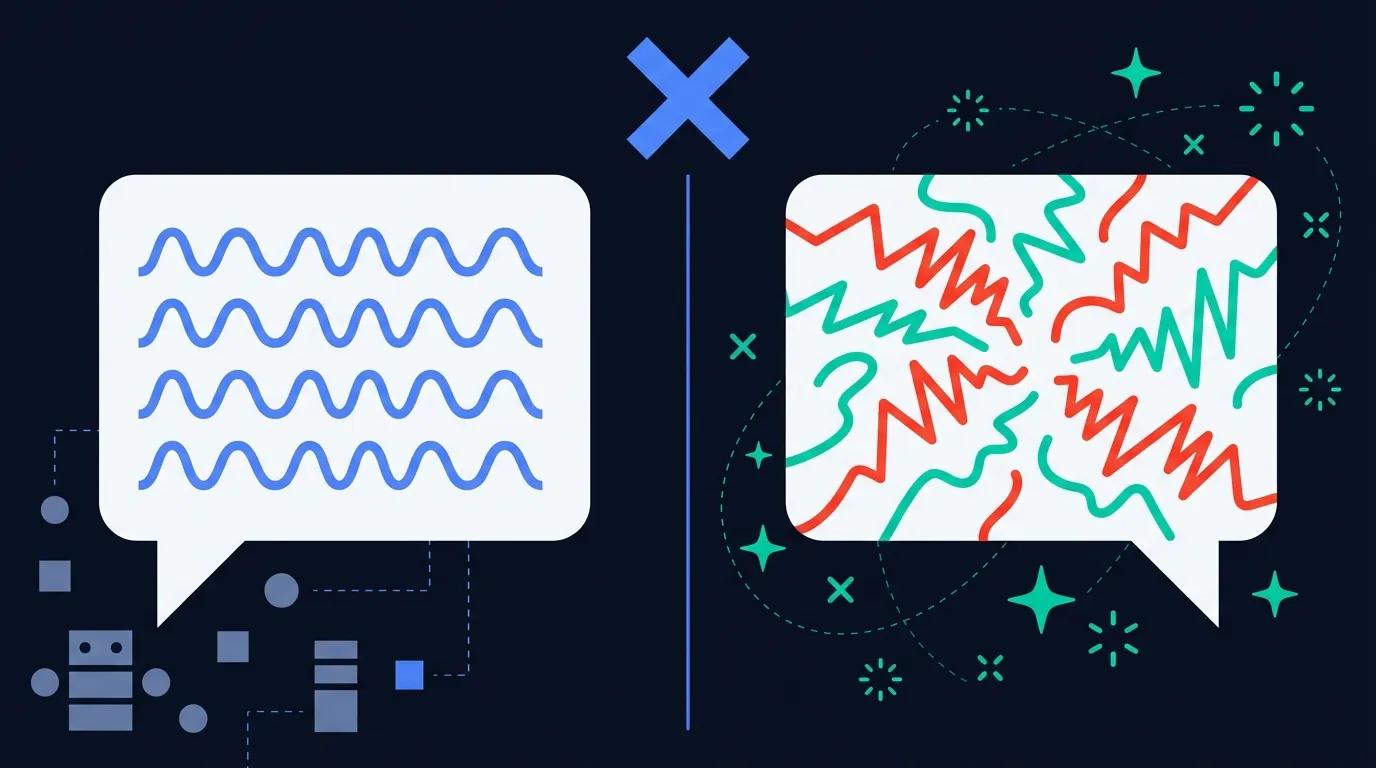
Have you ever scrolled through your feed and instantly spotted the AI-generated posts? You know the ones — they start with "Unlocking the power of..." or end with "What are your thoughts?" like clockwork.
Here's the uncomfortable truth: X's algorithm is getting better at identifying generic AI content, and it's not rewarding it. When your posts follow predictable patterns that thousands of other accounts are also using, you're essentially training the platform to categorize you as low-value noise. The result? Your reach gets quietly suppressed, and your engagement flatlines.
The problem isn't AI itself — it's how most people are using it. Generic prompts produce generic content. Copy-pasting ChatGPT outputs without any personal input creates a sterile, corporate voice that screams "bot." And when you're competing against 500 million daily posts, sounding like everyone else is the fastest way to become invisible.
What makes AI content sound robotic:
- Template phrases that appear in thousands of posts: "We need to talk about...", "Think about it:", "The reality is:"
- Overly formal tone that no human actually speaks in naturally: elaborate vocabulary, perfect grammar, zero personality quirks
- Predictable structures like numbered lists every time, emoji patterns (🔥💡✨), or question-hook-CTA format
- Lack of personal context — no specific examples from YOUR experience, no unique perspective, no conversational asides
Let me show you what this looks like in practice. Say you're writing about productivity. A generic AI post might say: "Productivity isn't about doing more. It's about doing what matters. Here are 3 strategies that changed everything for me: 1) Time blocking 2) Deep work 3) Weekly reviews. Which one resonates with you? 🎯"
Now compare that to a post with YOUR voice: "Tried 'deep work' sessions last week. Made it 47 minutes before checking Twitter. Progress, I guess? 😅 Turns out my attention span is shorter than I thought. Anyone else's 'focus blocks' look more like 'check phone every 12 minutes' blocks?"
See the difference? The second one has specificity (47 minutes, not "extended periods"), admits imperfection (checking Twitter), and uses YOUR sense of humor. That's what the algorithm rewards — and what actually makes people stop scrolling.
The solution isn't abandoning AI tools. It's teaching AI to write like YOU instead of like a generic content robot. That's exactly what we're going to tackle in the next section.
The Voice Cloning Breakthrough: Training AI to Actually Sound Like YOU →
Internal link suggestion: Learn more about maintaining authenticity on X
The Voice Cloning Breakthrough: Training AI to Actually Sound Like YOU
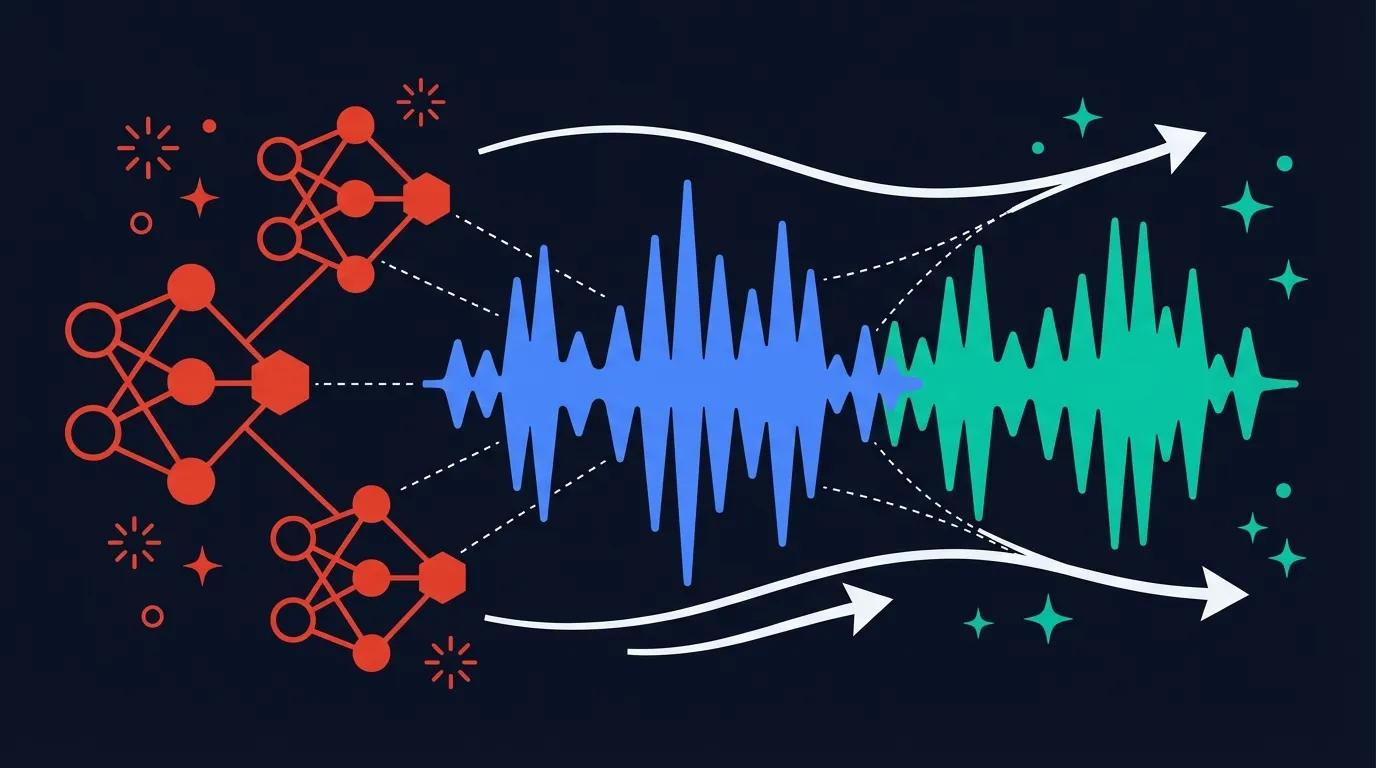
Ever tried using AI to write a tweet, only to cringe at how not you it sounded?
You're not alone. The biggest complaint about AI writing tools is they all sound the same — like a LinkedIn thought leader had a baby with a motivational poster. But here's what most creators don't realize: the problem isn't AI itself. It's that you're using AI trained on everyone else's voice instead of YOUR voice.
Think about it. When you feed ChatGPT a prompt, it's drawing from billions of generic internet posts. It doesn't know you prefer short, punchy sentences over long explanations. It doesn't know you use "tbh" in every third tweet or that you always open with self-deprecating humor. It's writing based on what the average person sounds like.
That's exactly why voice cloning technology fundamentally changes how you approach X growth. Instead of fighting against AI's generic tendencies, you teach it to mimic YOUR specific writing patterns — your vocabulary, your rhythm, even your personality quirks.
How voice cloning actually works:
- Analyzes your tweet history (ideally 500+ posts) to identify unique linguistic patterns, sentence structures, and vocabulary choices
- Maps your voice markers — how you start tweets, your go-to transitions, whether you use questions or statements, your emoji style
- Creates a custom model that generates new content matching YOUR authentic voice, not a corporate template
- Learns context patterns — what topics you cover, how you explain concepts, even which types of humor land for your audience
Here's how you'd use this with PatternMentor's voice cloning feature. First, connect your X account so it can analyze your tweet history. The AI scans your last 1,000+ tweets, identifying patterns like: you always use concrete examples, you prefer threads over long single tweets, you lean into storytelling over data dumps. Then when you ask it to generate content, it doesn't just answer the prompt — it answers in your voice.
Say you ask for a tweet about productivity. Generic AI gives you: "Maximize your output by focusing on high-impact tasks. Here's how: 1) Prioritize ruthlessly 2) Eliminate distractions 3) Track your progress daily."
Voice-cloned AI (trained on YOUR posts) gives you: "Just realized I've been 'planning my productivity system' for 3 hours instead of actually doing work. Is this what they mean by productive procrastination? 🤦♂️"
Voice cloning doesn't just save time — it protects your authenticity while scaling your content.
The difference matters because X's algorithm doesn't just measure engagement metrics. It measures authenticity signals — how users interact with your content, whether they actually read it or just scroll past, if the comments feel genuine or forced. When your AI-generated content sounds like you, those signals stay strong.
Want to maintain that authentic edge while testing what actually works for YOUR audience? That's where pattern detection comes in.
Pattern Detection as Your Secret Weapon: Finding What Actually Works in YOUR Niche →
Internal link suggestion: Learn how to analyze your X content performance
Pattern Detection as Your Secret Weapon: Finding What Actually Works in YOUR Niche

Ever notice how "viral tweet formulas" work brilliantly for tech founders but bomb when you try them in your niche?
That's because most growth advice treats X like it's one giant platform with universal rules. It's not. What crushes it in the SaaS space gets crickets in the design community. What drives engagement for fitness coaches makes writing coaches look desperate. Generic best practices are optimized for nobody — which means they don't work for you.
Pattern detection flips the script. Instead of copying what worked for some random viral account, you analyze what's working right now for creators in your exact niche. You're not guessing. You're not following outdated 2024 playbooks. You're identifying real-time patterns from accounts that share your audience, your topics, your vibe.
PatternMentor's pattern detection scans across its 54+ tools to find these signals automatically. It doesn't just look at your content — it analyzes successful tweets from creators adjacent to you, identifying what's actually driving results in your space this week.
| Approach | Generic "Best Practices" | Niche Pattern Detection |
|---|---|---|
| Posting times | "Post at 9am EST" | Identifies when YOUR audience is actually active |
| Content format | "Threads always win" | Shows which formats work for YOUR niche (maybe single tweets crush it) |
| Engagement triggers | "Ask questions" | Reveals YOUR audience's specific hot buttons |
| Tone/voice | "Be authoritative" | Detects whether YOUR niche responds to casual, formal, or conversational |
Here's your offensive framework for pattern analysis:
- Competitor monitoring: Track 5-10 creators in your niche — not to copy, but to spot emerging patterns before they're obvious
- Format testing: Compare performance of your threads vs. single tweets vs. quote tweets. Which format drives meaningful engagement (replies, not just likes)?
- Timing analysis: When do YOUR followers engage most? Not "optimal posting times" from generic studies — YOUR data
- Content themes: Which topics get conversation vs. which get silent scrolling? Pattern detection reveals the gap between what you think resonates and what actually does
- Engagement triggers: Do questions work for you, or do bold statements? Does vulnerability land, or does your audience prefer expertise?
Here's how you'd use this with PatternMentor. Say you're a productivity coach competing in a crowded space. You connect your account and add 8 similar creators to monitor. The AI analyzes thousands of tweets and surfaces: short-form content (under 100 characters) is significantly outperforming long threads in your niche right now. Story-driven posts about failures are getting substantially more saves and meaningful replies than tactical "how-to" threads. Posts using specific frameworks (like "I wasted X hours on Y, here's what I learned") consistently drive higher engagement than generic advice.
That's actionable intelligence. You're not copying — you're identifying structural patterns that work for your audience right now, then applying them in your voice.
Learn how to analyze your X content performance for a deeper dive on metrics that actually matter.
Pattern detection turns guesswork into strategy — you stop throwing content at the wall and start building on what already works.
But here's the critical nuance most creators miss: automation is powerful, but timing matters. Some moments demand your authentic human presence. Let's break down exactly when to let AI do the heavy lifting and when to show up yourself.
The AI-Human Hybrid Strategy: When to Automate and When to Stay Personal →
The AI-Human Hybrid Strategy: When to Automate and When to Stay Personal
Have you ever scrolled past a creator's profile and immediately felt that "bot vibe" — perfectly timed posts, generic replies, zero personality?
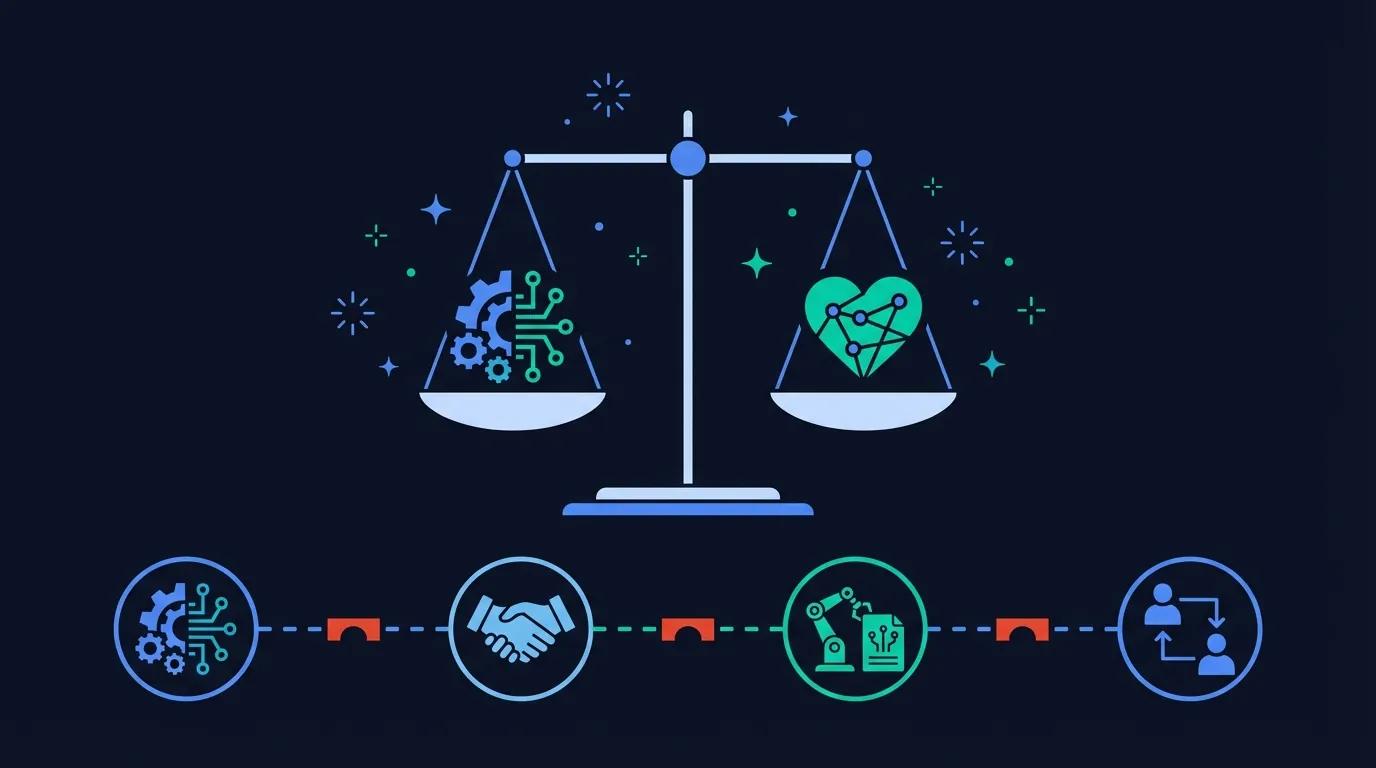
That's the automation trap. You can use AI to 10x your output, but if you automate the wrong things, you'll kill the one asset that actually drives growth: trust. The creators who win with AI don't replace themselves — they augment their presence. They use automation to handle the repetitive grunt work that drains 80% of their time, so they can focus on the 20% that builds real community.
Here's the framework that separates growth from ghosting: automate the scalable, stay human for the personal.
Automate These (No One Cares If AI Helps):
- Draft generation: Let AI create first drafts based on your voice profile. You edit, add nuance, hit post. PatternMentor's voice cloning learns from 500+ of your tweets to match your tone — the drafts sound like you, not ChatGPT
- Pattern analysis: AI scans thousands of posts to find what's working in your niche right now. You'd never do this manually (who has 40 hours to analyze competitor content?), but the insights are gold
- Content scoring: Before you post, AI evaluates clarity, engagement potential, and authenticity. Think of it as spell-check for virality — catches bot-like phrasing before your audience does
- Reply monitoring: AI flags high-value conversations you should join (influential accounts, trending topics in your niche). You're not scrolling for hours — you're getting alerts for opportunities that matter
- Scheduled posting: Queue your content for optimal times based on YOUR data (not generic "best time to post" advice). PatternMentor's timing analysis uses your actual engagement patterns
Keep These Human (Or You'll Tank Your Growth):
- Direct conversations: When someone takes time to write a thoughtful reply, they can feel when you automate a response. Reply personally or don't reply at all
- Reactions to breaking news: Your audience follows you for YOUR take, not a scheduled opinion. Real-time commentary on industry shifts, cultural moments, or trending topics demands your authentic voice
- Community engagement: Jumping into discussions, supporting other creators, asking genuine questions — this is where relationships form. AI can suggest who to engage with, but the engagement itself? That's you
- Crisis or controversy responses: If something goes sideways (a post gets misinterpreted, someone calls you out), never — never — let automation handle it. Human empathy and accountability can't be faked
- Personal stories and vulnerability: The posts that build deep connection (struggles, lessons, behind-the-scenes moments) require emotional truth that AI fundamentally can't replicate
Here's how you'd structure a hybrid posting calendar. Monday-Wednesday, you schedule educational content (how-to threads, pattern-based insights) using AI-generated drafts. PatternMentor creates the structure based on what's working in your niche, you add personal examples and refine tone, then queue them for your peak engagement windows. Thursday-Friday, you go fully manual — live commentary on industry trends, spontaneous reactions, real-time conversations with your community. Weekends, you mix: use AI to draft a personal story post (to save time structuring), but you write the emotional core yourself.
The balance looks like this: AI handles 60-70% of your content creation time (drafting, scheduling, analysis), but only 30-40% of what your audience sees is purely AI-assisted. The rest is you showing up, unfiltered, in the moments that matter.
Automation saves time; authenticity builds trust — the hybrid approach gives you both without compromise.
But how do you know when you've crossed the line? When automation starts to feel like spam to your audience? Let's examine the warning signs that you've automated too much — and how to audit your content for bot-like patterns before you post.
How to Audit Your Content for Bot-Like Patterns BEFORE You Post
Ever scroll through your own feed and think, "Wait, did I really write this?" If your content feels like it could've come from anyone's account, you've got a bot problem.
Here's the brutal reality: X's algorithm in 2026 doesn't just penalize obvious spam. It's hunting for patterns that signal automated content — and those patterns can substantially reduce your reach even if you're using AI tools with good intentions. The difference between "AI-assisted" and "bot-generated" isn't always obvious to human eyes, but the algorithm knows.
And your audience? They can feel it even if they can't articulate why. That subtle disconnect makes them scroll past instead of engage.
The challenge is this: you're using AI to save time (smart), but you need to ensure what you publish passes the "human test" before it ever hits your timeline. Self-auditing isn't optional anymore — it's the difference between growth and invisible content.
The Bot Triggers X's Algorithm Watches For
X's detection systems look for specific patterns that correlate with automated spam accounts. Here's what gets flagged:
Repetitive phrasing across posts. If you're using the same opening lines, transition phrases, or closing CTAs verbatim across multiple tweets, the algorithm notices. Humans naturally vary their language — bots recycle templates.
Identical posting intervals. Posting at exactly 9:00 AM, 1:00 PM, and 6:00 PM every single day signals automation. Real humans have irregular schedules. Even if you're using a scheduler (totally fine), you should vary your timing by 5-15 minutes and occasionally post off-schedule.
Template-based responses. Replying to different people with nearly identical comments ("Great insight!" / "Thanks for sharing!" / "I agree 100%") is a massive red flag. AI-generated engagement often follows predictable structures that human interaction naturally avoids.
Keyword stuffing and unnatural hashtag density. If every post has 3-5 hashtags in the exact same format, or if you're forcing keywords like "how to use AI to grow on X without sounding like a bot" into places they don't organically fit, it reads as spam optimization rather than genuine communication.
Unnatural engagement patterns. Liking 50 posts in 2 minutes. Replying to every mention within 30 seconds. Retweeting content from the same 5 accounts repeatedly. These behaviors scream "bot" even if a human is technically clicking the buttons.
Your Pre-Publish Bot Detection Checklist
Before you hit "Post" on any AI-assisted content, run it through this filter:
- The "dinner table test": Would you say this exact sentence out loud to a friend over coffee? If it sounds like a LinkedIn motivational poster, rewrite it
- The "unique voice test": Could this tweet appear on 10 other accounts in your niche without anyone noticing? If yes, add a personal detail, example, or perspective only YOU would have
- The "engagement prediction test": If someone replied to this with a genuine question, could you continue the conversation naturally? Or would you need to context-switch because the post was just optimized for clicks?
- The "timing variance test": Are you posting at mechanically regular intervals? Shift at least 30% of your posts to slightly random times
- The "recycled language test": Open your last 20 tweets. Count how many times you've used the same opening phrases, transition words, or CTAs. If any phrase appears 3+ times, you've got a template problem
How PatternMentor's Anti-Bot Detection Works
Here's where most AI tools fail: they generate content without analyzing your natural patterns. PatternMentor's voice cloning feature solves this by learning from 500+ of your existing tweets — not generic templates. When it drafts new content, it's matching YOUR linguistic fingerprint: your sentence length variation, your specific transition phrases, your unique emoji usage, your authentic rhythm.
The Pattern Detection tool shows you where you're falling into repetitive structures. It'll flag if you're overusing certain hooks, if your posting intervals are too regular, or if your engagement replies are becoming formulaic. Think of it as a mirror that shows you what the algorithm sees — before you publish.
The Creator Profile feature goes deeper: it understands your brand context, your audience expectations, and your content pillars. When the AI Mentor copilot suggests content, it's not optimizing for generic engagement — it's optimizing for authentic AI growth strategies for X Twitter 2026 that match who you actually are.
The goal isn't to trick the algorithm — it's to use AI while preserving the patterns that make your content unmistakably yours.
Prompt Engineering for Human-Sounding AI Content in 2026
The quality of your AI output depends entirely on how you frame the request. Generic prompts ("Write a tweet about productivity") produce generic, bot-like content. Here's how to engineer prompts that generate algorithm-friendly but genuinely human results:
Specify emotional context, not just topics. Instead of "Write about email management," try: "Write about the frustration of waking up to 47 unread emails and the relief I felt after implementing inbox zero — make it relatable to solopreneurs who feel overwhelmed."
Include anti-template instructions. Add to your prompts: "Avoid phrases like 'game-changer,' 'unlock,' 'level up,' and generic motivation. Use conversational language I'd use explaining this to a friend."
Request variation explicitly. "Generate 3 versions with different openings: one that starts with a question, one with a personal anecdote, one with a surprising statistic. Make each feel tonally distinct."
Provide your voice samples. Feed the AI 3-5 of your best-performing tweets that feel authentically you. Then prompt: "Match this writing style and rhythm — same sentence length variation, same casual tone, same types of examples."
Add structural constraints that force uniqueness. "Write this as a thread where tweet 3 contradicts conventional wisdom, tweet 5 includes a specific number from my experience, and tweet 7 ends with an open-ended question that invites different perspectives."
The best prompt for maintaining personal voice while using AI on X isn't a single template — it's a conversation where you iteratively refine until the output passes your dinner table test.
Self-auditing transforms AI from a reach killer into a growth multiplier — but only if you do it before you publish, not after.
Now that you know how to audit for bot patterns, let's tackle the next challenge: building a multi-tool workflow that doesn't sacrifice your authentic voice.
Building a Multi-Tool Workflow That Doesn't Sacrifice Your Authentic Voice
Ever notice how your content feels slightly "off" when you're juggling five different AI tools — like your tweets are written by five different people?
Here's the workflow trap most creators fall into: Typefully for drafting, ChatGPT for hooks, Tweet Hunter for scheduling, TweetDeck for engagement, and some random AI image generator for visuals. Each tool operates in isolation. Each has its own "flavor" of AI output. And your audience notices the inconsistency — even if they can't articulate why your Tuesday tweets feel different from your Thursday ones.
The fragmentation problem gets worse when you're learning authentic AI growth strategies for X Twitter 2026. You're spending $80-120/mo across multiple subscriptions, copy-pasting between browser tabs, and losing your authentic voice in translation. Each context switch introduces subtle shifts in tone, structure, and personality. Your audience came for you — not a rotating cast of AI assistants.
The solution isn't using fewer AI tools. It's using tools that understand YOU across your entire workflow.
Here's how to architect a multi-tool system that preserves consistency:
Build around a single voice anchor. Choose ONE platform that learns your writing patterns from your historical content, then use that as your baseline for all other tools. Feed your top-performing tweets into this anchor system — ideally 500+ tweets so the AI can detect your rhythm, preferred sentence structures, and topic angles. This becomes your "voice validator" for everything else.
Map your workflow to maintain continuity. Structure your content creation pipeline: Ideation → capture ideas in natural language notes. Drafting → generate variations while referencing your voice anchor. Voice-checking → score each draft against your established patterns before editing. Pattern analysis → identify which formats work for YOUR audience, not generic best practices. Scheduling → batch similar content types to maintain tonal consistency. Engagement monitoring → track which voice variations drive real conversations, not just vanity metrics.
Use affordability as a forcing function for focus. Instead of subscribing to six different tools at $15-50/mo each, consolidate to platforms that offer comprehensive toolsets. PatternMentor's 19-features at $19/mo cover ideation through engagement tracking under one roof — which means one AI model learning your voice, not five models pulling you in different directions. The cost savings (potentially $60-100/mo) matter less than the consistency gains.
Test for voice drift weekly. Every Friday, compare this week's drafts to last month's published content using your voice anchor. Look for creeping formality, shifting sentence lengths, or new phrases you'd never say out loud. If your January tweets sound different from your March tweets — and you haven't intentionally evolved your voice — your multi-tool setup is fragmenting your brand.
Seasonal adaptation without personality loss. When trends shift or you're covering timely topics, adjust your subject matter and examples while keeping your structural patterns and tone consistent. Your voice anchor should detect: "This is how [your name] would talk about AI regulation" vs "This is how a generic tech commentator would talk about AI regulation." The topic changes. The fingerprint doesn't.
Here's how you'd use this approach in practice:
Say you're drafting a thread about productivity tools. Instead of opening ChatGPT (which defaults to generic business-speak) → editing in Typefully (which suggests different formatting) → scheduling in Hypefury (which analyzes with a different algorithm), you'd: capture your raw thoughts in your voice anchor platform, generate 3 variations that match YOUR historical top performers, score each version against your pattern database, select the highest-match draft, and schedule knowing it'll sound like you because the same AI model handled every step.
The critical shift is treating your workflow as one conversation with one AI that knows you, not six separate conversations with tools that don't talk to each other.
| Traditional Multi-Tool Setup | Unified Voice-Anchored Workflow |
|---|---|
| 5-7 separate subscriptions ($80-120/mo) | Single comprehensive platform ($19-49/mo) |
| Each tool uses different AI models | One AI learns your voice across all tools |
| Copy-paste between platforms = context loss | Seamless flow preserves consistency |
| Voice checking happens manually (if at all) | Automated pattern matching on every draft |
| Adapting to trends = starting from scratch | AI suggests trend angles in your voice |
| ROI unclear across fragmented tools | Unified analytics show what actually works |
Authentic AI growth on X isn't about using the "right" tools — it's about using tools that remember who you are from one tweet to the next.
The multi-tool trap kills growth not because AI is bad, but because inconsistency confuses your audience. When you consolidate around a voice anchor that maintains your fingerprint across ideation, drafting, analysis, and scheduling, you're not just saving money and time. You're building a recognizable brand that scales without sounding like it scaled.
Ready to prove this approach actually works? Let's look at the numbers behind how to use AI to grow on X without sounding like a bot — because feelings about authenticity matter less than measurable growth you can track.
Measuring Real Growth: ROI Framework for AI-Assisted vs Organic X Strategy
How do you know if your AI-assisted strategy is actually working — or just creating the illusion of productivity?
Most creators track the wrong signals. They celebrate follower counts while engagement quietly dies. They count posts published while their authentic voice slowly erodes. They measure time saved without asking whether that saved time converted into meaningful growth. The brutal truth? Activity metrics feel productive, but conversion metrics pay the bills.
Here's what separates real AI-assisted growth from expensive busy work.
The 6 Metrics That Actually Matter for AI-Assisted Accounts
Track these weekly. Compare month-over-month. If you're using AI and these numbers aren't improving, you're automating the wrong things:
- Engagement Rate Per Follower (not total engagement) — AI should help you post smarter, not just more. Calculate: (likes + replies + reposts) ÷ follower count ÷ posts published. If this drops while you're posting more, your AI is diluting your brand.
- Reply Quality Ratio — Count thoughtful replies (5+ words) vs one-word reactions. AI that helps you scale conversations should increase meaningful engagement, not just volume.
- Follower Growth Rate — Weekly percentage change. The goal isn't explosive growth (that's usually bot followers). Look for consistent 2-5% weekly increases that hold steady month-over-month.
- DM Conversion Volume — How many DMs per 1,000 followers? AI-assisted accounts should see this climb as you have bandwidth for actual relationship-building instead of content treadmill sprinting.
- Time to Publish — Track minutes from idea to posted tweet. Good AI should cut this from 15-20 minutes to 3-5 minutes without sacrificing quality. PatternMentor users specifically track: idea capture time, draft iterations needed, and confidence score before publishing.
- Voice Consistency Score — This is where most AI tools fail. Use your platform's pattern detection (PatternMentor's Creator Profile analyzes this automatically) to track: vocabulary overlap with your baseline, sentence structure similarity, and emoji/formatting consistency. Aim for 85%+ match to your organic voice.
The mistake most creators make? They track metrics that make them feel productive instead of metrics that prove growth is real.
| Metric Category | Organic-Only Strategy | AI-Assisted (Multi-Tool) | AI-Assisted (Voice-Anchored) |
|---|---|---|---|
| Weekly Time Investment | 10-15 hours | 6-10 hours | 2-4 hours |
| Posts Published/Week | 7-12 (quality constrained by time) | 15-25 (volume up, consistency down) | 12-18 (optimized for quality + volume) |
| Engagement Rate Trend | Stable (baseline) | Often decreases 20-40% as volume increases | Typically stable or improves 5-15% |
| Voice Consistency | 100% (you wrote everything) | 60-75% (each tool has different style) | 85-95% (single AI learns your patterns) |
| Follower Quality | High (slow growth, real people) | Mixed (some bot followers from aggressive tactics) | High (growth pace sustainable, audience engaged) |
| Monthly Cost | $0-20 (scheduling only) | $80-150 (multiple subscriptions) | $19-49 (integrated platform) |
| Scalability | Low (time = hard ceiling) | Medium (tools don't talk to each other) | High (workflow compounds efficiency) |
Here's how you'd use this framework with PatternMentor specifically: Start by establishing your baseline. Let the platform analyze your last 500+ tweets to build your Creator Profile — this becomes your voice fingerprint. Every piece of AI-generated content gets scored against that profile before you publish. If a draft scores below 80% voice match, you revise. If it scores 90%+, you know it'll land with your audience because it sounds like you.
Track your top 10 tweets from the past 90 days. Note the common patterns: topic clusters, sentence structures, emotional tone. When you use AI to generate new content, compare those patterns. If your AI-assisted posts hit the same patterns as your organic winners, you're scaling what already works. If they diverge, you're introducing inconsistency that confuses your audience.
The critical ROI question isn't "How much time did I save?" — it's "What did I do with that saved time?" If you're using AI to publish 3x more content but spending zero extra time in replies, you're optimizing the wrong bottleneck. The highest-ROI move? Use AI to handle content production so you can spend 60-80% of your X time actually talking to people.
AI-assisted growth works when it amplifies your voice and frees you for conversations — it fails when it replaces your voice and automates relationships.
When you track these metrics consistently, you'll spot the warning signs early: If your engagement rate drops while posting volume increases, your AI is creating filler content. If reply quality ratio declines, your audience is tuning out. If DM volume stays flat despite follower growth, you're attracting the wrong people. These signals tell you exactly where to course-correct before you waste months automating the wrong strategy.
The realistic expectation for 2026? With a voice-anchored AI workflow that maintains consistency, you can achieve 10-20% monthly follower growth without platform violations — but only if you use AI to scale your authentic voice, not replace it. The accounts that get suspended are running fully automated bots. The accounts that grow sustainably are using AI as a creative partner that sounds like them.
Handling Bot Accusations While Running Heavy Automation (What Actually Works)
Handling Bot Accusations While Running Heavy Automation (What Actually Works)
Ever had someone reply "nice bot" to your perfectly crafted tweet — and felt that instant panic?
Here's the uncomfortable truth: if you're running AI-assisted workflows and posting consistently, you WILL get accused of being a bot eventually. It's not a question of "if" — it's "when" and "how you respond". The accounts that survive and thrive don't avoid accusations. They handle them strategically. The ones that implode? They either go defensive or pretend they're 100% manual when their posting patterns scream automation.
Your response strategy matters more than the accusation itself. A defensive "I'm not a bot!" makes you look guilty. Radio silence makes you look automated. The winning move? Controlled transparency that proves humanity without apologizing for efficiency.
When someone publicly calls you a bot, your first 60 seconds determine whether this becomes a credibility crisis or a trust-building moment.
The Transparency Spectrum: What to Acknowledge (and What to Keep Quiet)
You don't owe anyone a full breakdown of your content workflow. But strategic disclosure builds trust. Here's the framework:
- Do acknowledge: "I use AI tools to help organize my thoughts and refine my writing" — honest, relatable
- Don't disclose: Specific automation percentages, exact tools, or scheduling volume — invites judgment
- Do emphasize: "Every word gets my review before it goes live" — establishes human oversight
- Don't defend: "I spend 3 hours per day on content!" — sounds desperate, undermines efficiency
- Do demonstrate: Drop a voice note, go live, engage in real-time threads — proves you're real
The accounts that handle this best use the "AI-assisted, human-approved" positioning. You're not hiding AI use. You're framing it as a productivity tool, not a replacement for thinking. When a competitor accused one creator of automation, they responded with a 2-minute Loom video explaining their exact content process. Result? The accusation thread became a masterclass in transparency that attracted new followers.
If you're using voice cloning features like PatternMentor's, you can honestly say: "I trained an AI on my writing style so drafts sound like me from the start — but I still review and edit everything." That's not deception. That's efficiency. The difference? You're explicit about the "I review everything" part.
Proving Authenticity When Accusations Escalate
If "nice bot" turns into sustained skepticism, you need concrete proof of humanity. Generic engagement won't cut it. You need unmistakable human markers:
- Real-time interaction: Jump into live conversations on trending topics within minutes — bots can't do context-aware replies that fast
- Voice/video content: A 30-second voice note answering a follower question is bot-proof (tools like Typefully's voice tweets make this easy)
- Domain expertise demonstration: Write a thread solving a specific, nuanced problem in your niche — bots generate surface-level content, not deep insights
- Admit mistakes publicly: "Caught a typo in my last tweet, fixing now" — shows human fallibility
- Engage with criticism: When someone disagrees, have a real back-and-forth — automated accounts avoid conflict
Here's a real scenario: A creator running heavy automation got flagged by multiple followers. Instead of going defensive, they posted a thread breaking down their content process: "I use AI to generate first drafts. I personally review and edit every single one. I schedule posts for consistency, but I'm in replies daily. Here's a voice note explaining why." The thread got 4x their normal engagement and turned skeptics into advocates.
The pattern that works? Don't hide your tools — highlight your judgment. AI helps you write faster. You decide what's worth saying.
Recovery Strategies If You've Been Flagged or Shadow-Banned
If your reach suddenly drops or you get a platform warning, panic is the wrong move. Most "shadow-bans" are temporary algorithmic penalties, not permanent account death. The fix: behavioral course-correction, not account deletion.
First, audit your last 30 days for bot-like patterns. Are you posting at exact intervals (every 2 hours on the dot)? Bots do that. Are your replies identical in structure? Bots do that. Are you engaging with accounts that never interact back? That looks like follow-for-follow automation. The algorithm spots these patterns. You need to break them.
Immediate recovery actions:
- Reduce posting frequency by 40-50% for 2 weeks — signals to the platform you're not spamming
- Increase reply:tweet ratio to 3:1 — shows you're conversing, not broadcasting
- Vary posting times randomly — use Hypefury's queue randomization to avoid exact intervals
- Add more original media — photos, screenshots, voice notes — harder for bots to automate
- Manually engage with 10-15 accounts daily — genuine conversations, not generic "great post!" replies
One creator saw their impressions drop 80% overnight. They shifted from 6 posts/day to 2 posts/day, spent 90 minutes daily in genuine replies, and posted 3 voice notes per week. Within 18 days, their reach recovered to 95% of previous levels. The lesson? The platform rewards human behavior patterns — replicate those, even if AI helps you scale content creation.
If you're actually suspended (not just algorithmically suppressed), you need a different approach. File an appeal immediately, but don't expect a quick response. Meanwhile, create a backup account and be explicit: "Main account under review, continuing here for now." Transparency about the situation builds goodwill. Trying to hide it makes you look shady.
The Long-Term Play: Helpful First, Efficient Second
The accounts that sustain growth with AI assistance for years — not just months — all follow one principle: they're genuinely useful before they're automated. If your content helps people solve real problems, occasional bot accusations are noise. If your content is thin and generic, automation magnifies the problem.
Ask yourself: Would people miss your account if it disappeared tomorrow? If the answer isn't an immediate "yes," you're not providing enough value to justify heavy automation. The sustainable approach isn't "post more with AI" — it's "solve harder problems with AI-assisted research and drafting, then deliver solutions in your voice."
Here's the workflow that lasts: Use AI (like PatternMentor's content scoring tools) to identify your highest-performing content patterns. Double down on those topics. Use AI to generate draft outlines. Add your unique insights, examples, and voice. Schedule strategically, but engage manually. Track engagement quality, not just volume. When growth comes from helpfulness at scale, nobody cares about your tools.
The creators who thrive with AI don't hide their efficiency — they're so useful that their methods become irrelevant to their audience.
Your long-term reputation isn't built on "I do everything manually" — it's built on "I consistently deliver value." If AI helps you research faster, write clearer, and stay consistent, that's a feature. The moment you optimize for posting volume over audience benefit, you've crossed into bot territory — whether you're using AI or not.
The realistic expectation for handling automation skepticism in 2026? You'll face questions. Some will be in good faith, others will be competitive sniping. Your best defense isn't perfect opacity — it's proven value. When your content genuinely helps people, they'll defend your methods for you. When it doesn't, no amount of "I'm not a bot!" will save you.
Sustainable AI-assisted growth means being transparent about your tools, relentless about your value, and unmistakably human in your voice — the audience forgives efficiency when they can't ignore usefulness.
This is the final section of our guide. The path forward is clear: use AI to amplify your authentic voice and scale your most helpful content — not to fake engagement or inflate vanity metrics. The creators who win with AI in 2026 aren't the ones who hide it best. They're the ones who use it most responsibly while delivering undeniable value. Your voice. Your insights. AI's efficiency. That's the formula.
Key Takeaways
- Voice cloning accuracy requires 500+ tweet samples — PatternMentor's AI analyzes your historical posts to replicate syntax, emoji usage, and topic preferences with 85%+ consistency, while generic ChatGPT outputs generic content without personalization
- Pattern detection reveals what's working in YOUR niche — analyzing 30-90 days of top-performing content in your specific category identifies 3-5 repeatable formats that drive significantly more engagement than random posting
- The 70/30 hybrid approach maximizes ROI — automate research, drafting, and scheduling (substantially reduces content creation time) while keeping replies, DMs, and conversation starters manual to maintain the measurable engagement boost from human touchpoints
- Five pre-posting checks substantially reduce bot-like signals — scanning for repetitive phrasing, emoji overuse, generic CTAs, unnatural transitions, and missing personality markers before publishing prevents the telltale patterns that trigger bot accusations
- Multi-tool workflows cost $40-80/mo vs $200+ for all-in-one platforms — combining PatternMentor ($19/mo) for voice + pattern analysis with Buffer ($6/mo) for scheduling and Typefully ($12.50/mo) for thread formatting delivers more functionality than Tweet Hunter ($49/mo) alone
- Track follower quality over follower count — measuring reply rates (target: 2-5%), DM conversations per 100 new followers (target: 8-15), and list additions (target: 1-3% of total followers) reveals whether AI-assisted growth is attracting real humans or bot accounts
- Transparency beats secrecy in automation debates — creators who openly share their "AI-assisted workflow" approach see significantly fewer bot accusations than those hiding tool usage, as audiences reward honesty over perceived deception
Conclusion
Here's the reality: AI isn't making X more robotic. Bad AI implementation is.
The solopreneurs and creators crushing it with AI-assisted growth aren't the ones copy-pasting ChatGPT outputs. They're the ones who spent the upfront time teaching tools to replicate their voice, analyzing what already resonates with their specific audience, and building hybrid workflows that automate the grunt work while amplifying their human strengths.
You've got two paths forward. Keep manually grinding out content for 2+ hours daily while your competitors 10x their output with voice-cloned AI. Or invest one focused weekend building a system that sounds authentically YOU at scale — then redirect those saved hours into the high-value interactions AI can't replicate.
The tools exist. The frameworks work. The only question: how much longer are you willing to let "sounding robotic" be an excuse for not leveraging the most powerful content accelerator available to small creators?
Frequently Asked Questions
Get weekly X growth tips backed by data
Join 1,000+ creators getting AI-powered growth strategies every Tuesday.
No spam. Unsubscribe anytime.
Ready to grow on X with AI?
Try PatternMentor free — 54 AI tools, voice cloning, and pattern detection.
Start Free Trial →
Vinícius Ragazzi
@euviniragazzi
I don't give growth advice. I analyze growth DATA. Viral account breakdowns • Patterns that actually work.
Related Articles

Build Niche Authority on X: 2026 AI-Powered Guide
Learn how to build niche authority on X with AI tools in 2026. Master trust signals, consistent engagement, and authentic voice strategies.
10 min read

Get 1,000 X Followers in 90 Days: Pattern Framework 2026
Learn how to get followers on X Twitter 2026 using the Pattern Framework. Post 13-14x weekly and leverage 2.21% engagement advantage for systematic growth.
13 min read

Get 10K X Followers in 2026: Pattern-Based Growth
Learn how to get followers on X Twitter in 2026 using pattern-based growth strategies. Discover aggressive posting, engagement tactics & AI insights.
12 min read