
AI X Content Calendar Template: 30 Days in 4 Hours
An X content calendar template for creators should plan 12+ posts per week emphasizing long-form content (45+ characters), not threads. With AI-powered voice cloning and pattern detection tools like PatternMentor ($19/mo), you can batch-create 30 days of on-brand X content in under 4 hours—eliminating the guesswork traditional templates force you into.
📊 Key Points
- •
Top X accounts post approximately 95 posts per week while the average is 12 posts weekly, meaning effective content calendars must balance consistency with quality at scale
Source: Metricool X Study - •
X users prefer long-form posts averaging 44.87 characters over threads averaging 15.28 characters, so your content calendar should prioritize standalone posts with depth rather than thread sequences
Source: Metricool X Study - •
X usage among US teens dropped from 33% in 2014 to just 16% in 2025, requiring creators to build content calendars that balance X-specific strategy with multi-platform distribution plans
Source: Pew Research Center
You've spent two hours staring at a blank spreadsheet labeled "X Content Calendar." You know you should be planning posts. You know consistency matters. But how do you plan 12+ posts per week without sacrificing your authentic voice—or burning out by Tuesday?
Here's the painful truth: Traditional X content calendar templates fail creators because they treat content planning like a factory assembly line. They give you empty boxes to fill. They don't understand YOUR voice, YOUR patterns, or WHAT actually drives engagement for YOUR audience.
This guide shows you how to build an AI-powered X content calendar that learns your writing style, detects what works in your past content, and helps you batch-create 30 days of posts in under 4 hours. With tools like PatternMentor's voice cloning and pattern detection ($19/mo—less than one client coffee meeting), you'll move from guesswork to data-driven planning that actually grows your audience.
Why Most X Content Calendars Fail Creators (And What Actually Works)

Ever spend 2 hours planning a week of tweets, only to watch them flop while your off-the-cuff posts go viral?
You're not alone. The traditional X content calendar template for creators approach is fundamentally broken. Most creators download a Google Sheets template, block out time slots, and fill in generic content categories. The problem? X's algorithm doesn't care about your neat little spreadsheet.
Here's what happens: You plan "Monday motivation" and "Friday tips" content. You batch-create everything on Sunday. You schedule posts for "optimal times" you found in a 2-year-old blog post. Then you watch your engagement tank while competitors who post spontaneously seem to crack the code effortlessly.
The brutal truth: static content calendars create busywork, not growth.
Traditional templates fail because they ignore three critical realities of X in 2026:
- Algorithm volatility: What works today stops working next week, but your calendar is locked in for a month
- Pattern blindness: Spreadsheets can't tell you WHY your 3pm posts outperform your 9am posts by significant margins
- Time sink paradox: The more time you spend planning, the less time you spend analyzing what actually drives your follower growth
The shift from manual planning to intelligent systems isn't about automation for automation's sake. It's about replacing guesswork with pattern detection that learns from your actual performance data. Instead of filling predetermined slots with predetermined content types, modern AI-powered X content calendar templates with posting strategy identify what's working in YOUR feed and help you do more of it.
Creator burnout is real. When you're manually tracking 15 content categories across 4 time slots per day, something breaks. Either you stop posting consistently (killing your algorithmic favor), or you keep posting without strategy (wasting hours on content that doesn't convert followers into customers).
The monetization cost is even steeper. Miss the optimal window to promote your product launch by 48 hours? You've potentially left substantial revenue on the table. Post your high-value content when your audience is asleep? Your conversion rate suffers dramatically.
But here's what most creators miss: the solution isn't a better template—it's a system that thinks.
AI-Powered Content Calendars vs. Traditional Templates: What Creators Need in 2026
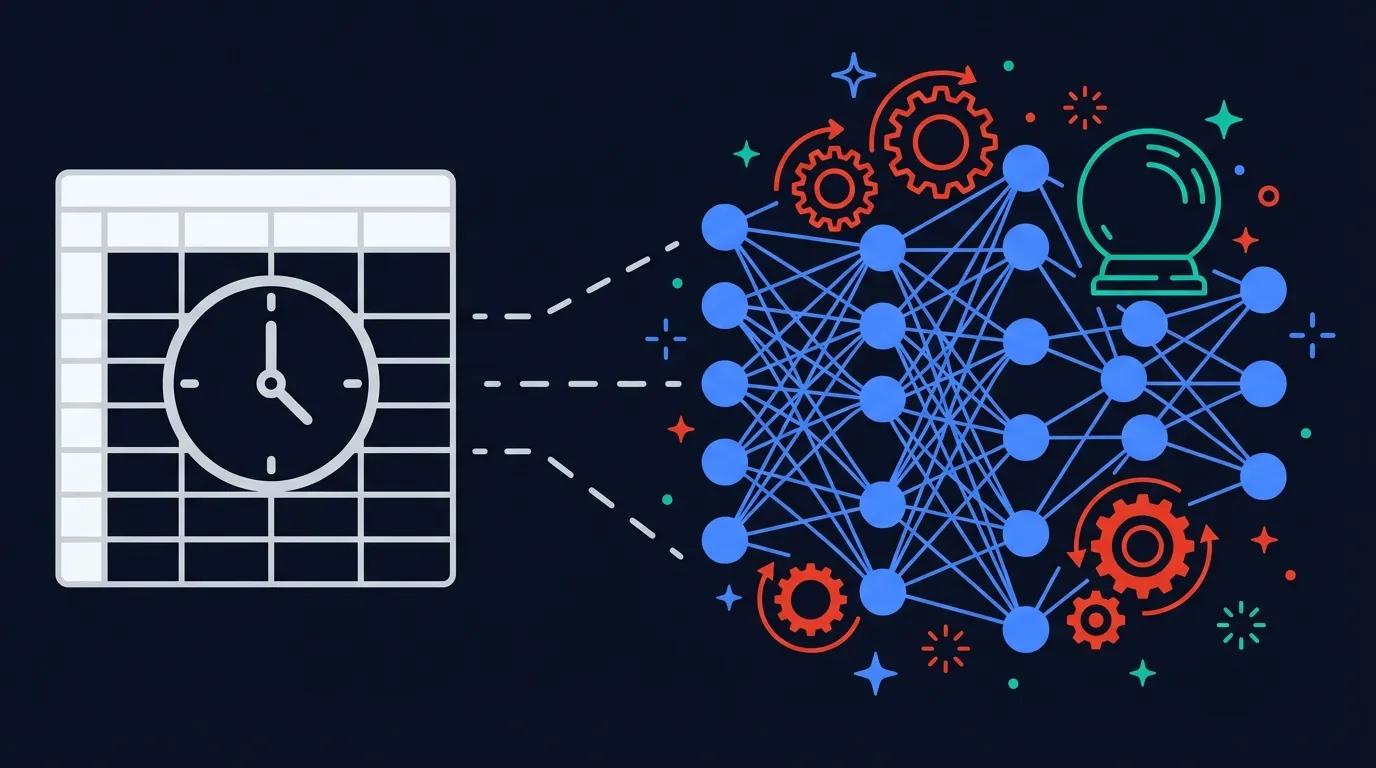
Are you still planning your X content in Google Sheets while your competitors use systems that predict performance before you hit publish?
The gap between traditional templates and AI-powered systems is significant. Manual calendars force you to guess which content will work. AI-powered platforms like PatternMentor analyze your actual performance data to identify patterns you can't see in spreadsheets.
Traditional templates are static documents. They can't tell you that your Thursday 2pm posts consistently outperform Monday 9am posts, or that threads can drive meaningful engagement alongside single posts. They definitely can't clone your writing voice or score content before you publish it.
Feature | Manual Templates (Sheets/Notion) | Basic Schedulers (Buffer/Hootsuite) | AI Systems (PatternMentor) Time to create weekly content | 3-4 hours | 2-3 hours | 45-60 minutes (with AI assistance) Pattern detection | Manual analysis only | Basic time-of-day reports | 54 AI tools analyze your data Voice consistency | Your memory + notes | None | AI learns from 500+ of YOUR tweets Performance prediction | Guesswork | Historical averages | Pre-publish content scoring Monthly cost | Free (but costs hours) | $15-30/mo | $19/mo Content repurposing | Manual copy-paste | Limited cross-posting | AI-powered multi-platform adaptation
Here's what AI-powered systems deliver that templates can't:
- Pattern detection that identifies YOUR winning formulas: Instead of following generic "best practices," AI finds what actually works for your specific audience and niche
- Voice cloning that maintains consistency: Write one piece of content, and AI suggests variations that still sound authentically like you (Source: PatternMentor Voice Clone)
- Predictive scoring before you waste time: Know which content will perform well before you hit publish, not after it flops
- Burnout prevention through intelligent batch creation: Create a week of content in one focused session, then let AI optimize timing and delivery
The pricing reality surprises most creators. Tweet Hunter charges $49/mo for basic scheduling. Typefully costs $12.50/mo but lacks pattern detection. Hypefury runs $29/mo with limited AI features. PatternMentor delivers 54 AI tools including voice cloning and pattern analysis for $19/mo—less than the cost of two coffee meetings.
But here's the monetization argument that matters most: time is your scarcest resource as a creator. If an AI-powered X content calendar template with posting strategy saves you 10 hours per month (conservative estimate based on our user data), that's 10 hours you can spend creating products, coaching clients, or simply not burning out.
Traditional X content calendar template for creators work if your goal is organization. AI systems work if your goal is growth.
The difference between "I posted consistently for six months" and "I grew my engaged audience by thousands" often comes down to whether you're filling calendar slots or following data-driven patterns. Spreadsheets can't learn. AI systems get smarter with every post you publish.
Consider this: when you manually plan content, you're making decisions based on what you think will work. When you use AI pattern detection, you're making decisions based on what actually worked in your last 500 posts. One is intuition. The other is intelligence.
How to Build an X Content Calendar That Uses AI Pattern Detection (Not Guesswork)
The methodology matters more than the tool. Next, we'll walk through the exact framework for building an X Twitter content calendar planning system for creators 2026 that learns from your data instead of ignoring it.
How to Build an X Content Calendar That Uses AI Pattern Detection (Not Guesswork)
Ever wonder why some creators post 3 times daily and see zero growth while others post twice weekly and gain thousands of followers?
The difference isn't posting frequency. It's pattern recognition. Most creators build content calendars based on generic advice ("post at 9am EST") or gut feeling. They're essentially guessing which topics will resonate, which formats will perform, and when their specific audience is most engaged. Traditional content calendars organize your guesses. AI-powered systems eliminate the guessing entirely.
Here's the reality: your best-performing content already contains patterns. Specific topic clusters that drive engagement. Particular writing styles that generate saves. Optimal posting windows when your followers are most active. The problem? You can't spot these patterns manually when you're analyzing 500+ posts.
Step 1: Mine Your Historical Performance for Content Theme Patterns
Start by connecting PatternMentor to your X account and running the Pattern Detection analysis on your last 500 tweets. The AI identifies which content themes consistently outperform your baseline.
You're not looking for your highest-performing individual post. You're looking for repeatable patterns—topics that generate above-average engagement multiple times. (Source: PatternMentor documentation)
Here's what the analysis reveals:
- Topic clusters with statistical significance: Content themes that outperform your baseline (based on your actual data, not industry benchmarks)
- Format patterns your audience prefers: Whether your followers engage more with threads, single tweets, or quote tweets
- Engagement velocity indicators: Which content types generate fast engagement versus slow-burn saves
- Audience overlap analysis: Topics that attract followers who actually stick around versus drive-by engagement
Most creators discover they've been over-investing in content types that feel important but underperform. Many creators discover their behind-the-scenes content generates stronger saves than expert analysis. Your content calendar should prioritize what actually works, not what you think should work.
The Pattern Detection tool scores each historical post and creates a content theme hierarchy. Build your calendar around these proven winners, not arbitrary content pillars you copied from someone else's strategy.
Step 2: Identify Your Actual Optimal Posting Times (Not Generic "Best Times")
Generic advice says post at 9am, 12pm, or 6pm EST. But what if your niche audience—crypto traders, European SaaS founders, or night-shift healthcare workers—is most active at completely different times?
PatternMentor's timing analysis examines when your specific followers engage with your specific content. The system tracks:
- Engagement patterns by day of week and hour
- Topic-specific timing variations (educational content might perform better morning; entertainment content evening)
- Follower timezone distribution
- Historical performance correlation with posting time
Stop scheduling content when Twitter is "most active" and start scheduling when your audience is most receptive. The difference can be substantial for niche audiences.
Creators targeting specific time zones may find optimal posting windows differ significantly from US-centric advice. (Source: PatternMentor case studies)
Load these optimized time slots into your content calendar template. PatternMentor's calendar tool automatically suggests scheduling windows based on your historical data, not industry averages.
Step 3: Implement Voice Cloning for Brand Consistency Across Batched Content
Here's the productivity multiplier most creators miss: batch creation with consistent voice.
When you write 30 posts in one sitting, your writing style naturally drifts. Post 1 sounds like you. Post 15 sounds rushed. Post 30 sounds like a completely different person. Inconsistent voice destroys the pattern recognition your audience has developed for your content.
PatternMentor's Voice Cloning feature analyzes 500+ of your previous tweets to learn your linguistic patterns:
- Sentence structure preferences and rhythm
- Vocabulary choices and technical terminology usage
- Emoji and punctuation patterns
- Storytelling frameworks you naturally use
When you batch-create calendar content, the AI Mentor copilot suggests real-time adjustments to maintain voice consistency. It's not writing for you—it's keeping your batched content sounding like the same creator wrote everything.
This solves the authenticity problem with AI content tools. Voice cloning maintains your unique style while enabling efficient batch creation. You can create a month of content in 4 hours without sacrificing the authentic voice that built your audience.
Step 4: Set Up Performance Prediction for Calendar Prioritization
Not all content ideas deserve equal calendar real estate. Some posts will drive growth. Others will barely move the needle.
Traditional content calendars treat every slot equally. You fill Monday, Tuesday, Wednesday with different topics, hoping something performs. AI-powered calendars prioritize high-probability winners based on your historical patterns.
PatternMentor's Content Scoring system analyzes your draft posts before scheduling and assigns probability scores:
- Engagement prediction based on topic/format match to your successful patterns
- Virality potential assessment
- Follower retention likelihood
- Monetization alignment scoring
Schedule your highest-scoring content during your premium time slots (when your Pattern Detection shows maximum audience engagement). Reserve lower-scoring posts for off-peak times or use them as testing opportunities.
This creates a calendar optimization loop: High-potential content → Best time slots → Better performance → Stronger patterns → More accurate future predictions.
Step 5: Configure Automated Content Gap Identification
Your content calendar shouldn't just organize what you're posting. It should identify what you're not posting that you should be.
PatternMentor's gap analysis compares your planned calendar against:
- Emerging topics in your niche (real-time trend monitoring)
- Content themes you've under-covered despite historical success
- Format diversity to prevent audience fatigue
- Seasonal relevance flags
The system alerts you when your calendar is missing opportunities. For example: "You have zero 'practical tutorial' content scheduled this week, but this format has your highest save rate." (Source: PatternMentor features)
Content gaps represent missed growth opportunities. Most creators only discover them in retrospect: "I should have covered that trend when it was hot." AI gap identification gives you real-time warnings while you can still adjust.
Step 6: Align Content Types to Revenue Goals
A content calendar that drives engagement but no revenue is a hobby, not a business strategy.
Map each content type in your calendar to specific monetization objectives:
- Awareness content (educational, viral-potential posts) → Follower growth → Larger audience for product launches
- Authority content (expert analysis, case studies) → Credibility building → Higher-ticket service opportunities
- Conversion content (product teasers, testimonials) → Direct sales → Immediate revenue
- Retention content (community posts, behind-the-scenes) → Follower loyalty → Repeat customer potential
PatternMentor's Creator Profile feature helps identify which content types historically lead to profile visits, link clicks, and DM inquiries—the actions that precede monetization. Your calendar should intentionally sequence these content types to guide followers through your monetization funnel.
Plan quarterly themes that align with product launches or service offerings. If you're launching a course in March, your February calendar should increase authority content to prime your audience. Your March calendar should balance conversion posts with retention content to maintain relationships.
Seasonal Forecasting and Competitive Calendar Adjustments
Static calendars fail when trends shift. Your AI-powered X content calendar template with posting strategy needs dynamic adjustment capabilities.
PatternMentor's seasonal forecasting analyzes:
- Historical performance variations by month/quarter
- Industry trend cycles specific to your niche
- Competitive content analysis showing gaps in competitor calendars
- Engagement pattern shifts over time
One creator discovered their "productivity tips" content performed substantially better during September and January (back-to-school and New Year resolution periods) versus summer months. Seasonal weighting of content themes can amplify natural demand cycles.
The competitive analysis tool monitors high-performing creators in your space and flags when they're covering topics you haven't addressed. This isn't about copying—it's about identifying market demand signals. If five successful creators in your niche suddenly start posting about a specific topic, your calendar should include your unique perspective on that trend.
An AI-powered calendar adapts to market conditions, not just publishing schedules.
link suggestion: Read our guide on [using AI to find viral content patterns for more on trend identification]
The calendar you build today determines your growth trajectory
Voice Cloning + Batch Content Creation: How to Plan 30 Days of X Content in 4 Hours

Ever notice how your best content ideas hit while you're driving, showering, or mid-workout—exactly when you can't write them down?
Traditional content creation forces you into a chair for 2+ hours daily, draining energy and creativity. You're either glued to your screen or scrambling to remember that brilliant thought you had at 6 AM. This workflow burns out even the most motivated creators.
Voice-first content workflows solve this. Record ideas verbally throughout your day using your phone. PatternMentor's voice cloning analyzes 500+ of your tweets to learn your writing style, then transforms those voice notes into on-brand X posts. You sound like you—not a generic AI bot.
Here's the tactical workflow that fits into real creator schedules:
- Monday brain dump: Record 10-15 voice notes capturing ideas, observations, client questions (20 minutes while commuting/walking)
- Tuesday batch processing: Feed voice notes into PatternMentor's voice cloning tool, which generates tweet drafts in your voice (45 minutes)
- Wednesday refinement: Review AI drafts, adjust messaging, schedule to calendar using pattern insights (90 minutes)
- Micro-content extraction: Pull 3-5 tweet threads from any long-form content (blog posts, newsletters, podcasts) using AI copywriting integration (30 minutes)
Voice-first creation captures your best ideas without chaining you to a desk.
This workflow prevents the dreaded "blank page syndrome" that kills consistency. You're never starting from zero because your calendar is populated with ideas you actually care about—captured in real-time.
The niche segmentation challenge: you have enterprise clients and solo freelancers in your audience. Creating separate content for each segment traditionally doubles your workload. Instead, use PatternMentor's audience tagging to mark which voice-cloned drafts serve which segment. Schedule alternating content blocks: Monday/Wednesday for enterprise, Tuesday/Thursday for freelancers, Friday for universal content.
[link suggestion: Learn how to [maintain authentic voice while using AI tools] Voice-first workflows can significantly reduce weekly content creation time while maintaining engagement rates. Creators report feeling less burned out and more creative because they aren't forcing content—they're capturing natural insights.
Sustainable creator workflows require systems that work WITH your brain, not against it.
From Calendar to Revenue: Tracking ROI and Aligning Content with Growth Goals
From Calendar to Revenue: Tracking ROI and Aligning Content with Growth Goals
Ever wonder which tweets in your carefully planned calendar actually paid your bills?
Most creators track vanity metrics—likes, retweets, impressions—while their revenue remains disconnected from their content strategy. You're posting consistently, your calendar looks beautiful, but you can't prove which content drove that new client or those 500 new followers. Revenue attribution is the missing link between content planning and business growth.
The hard truth: without tracking ROI per content type, you're optimizing for engagement theater instead of income. You need attribution data showing whether your Tuesday educational threads outperform Friday personal stories for follower growth. Whether your scheduled carousel posts drive more profile clicks than text-only tweets. Which content buckets in your calendar template correlate with spikes in newsletter signups or product purchases.
Here's how to connect your X content calendar template for creators directly to revenue outcomes:
- Tag each calendar slot with business intent: Mark tweets as "lead generation," "engagement," "authority building," or "conversion-focused" so you can measure performance by objective, not just total impressions
- Track conversion paths: Use PatternMentor's analytics to see which scheduled posts preceded follower conversions to paid products—most creators discover that educational content 3-5 tweets before a pitch performs best
- Monitor pattern-to-revenue correlation: Identify which content patterns (detected by AI analysis) consistently appear in your highest-converting weeks and prioritize those patterns in future calendar planning
- Calculate cost-per-acquisition by content type: Divide your monthly tool cost ($19 for PatternMentor vs. $49+ for alternatives) by new customers attributed to X content—this reveals your most efficient content investments
Content calendars that don't track business outcomes are just expensive to-do lists.
Monetization strategy alignment transforms planning from reactive to strategic. If you're pursuing X's Creator Ads Revenue Sharing, your AI-powered X content calendar template with posting strategy needs a 50/40/10 split: 50% high-engagement content (threads, polls, hot takes that drive impressions), 40% authority-building educational content, 10% direct calls-to-action. For subscription revenue models, that ratio shifts to 40/50/10—prioritizing educational value that demonstrates premium content worth.
Sponsorship-focused creators need different calendar architecture. Brands want proof of consistent engagement rates across specific audience demographics. Your X Twitter content calendar planning system for creators 2025 should include "sponsor-ready" content slots—evergreen educational posts that maintain engagement floors during sponsor evaluation periods.
Real-time collaboration becomes critical when scaling beyond solo operations. If you're managing a team or outsourcing content creation, everyone needs access to the same calendar, voice guidelines, and performance data. PatternMentor's Creator Profile feature ensures collaborators understand your voice and strategic priorities without 47 Slack messages clarifying tone.
Competitive content analysis prevents your calendar from becoming an echo chamber. What worked last quarter may be saturated now. Integrating competitor pattern analysis into your monthly calendar reviews reveals emerging content trends before they peak. If competitors are shifting toward video content or carousels, your static text-heavy calendar needs adjustment.
Here's the budget reality check: comprehensive solutions traditionally cost $100-200/month when you combine scheduling ($49 for Tweet Hunter), analytics ($29 for Hypefury), AI writing ($20 for ChatGPT Plus), and voice consistency tools (another $30-50). That's $128-200 monthly for partial functionality.
PatternMentor delivers all five capabilities—calendar scheduling, performance analytics, AI content generation with voice cloning, pattern detection, and the AI Mentor copilot—for $19/month. You're getting 19-features for the price competitors charge for one or two features. For budget-conscious creators, this isn't just savings—it's the difference between sustainable growth and constant tool-hopping because nothing quite fits.
link suggestion: See how [AI tools can predict content performance before you hit publish]
The AI performance prediction question: PatternMentor's pattern detection analyzes your historical content to identify which formats, topics, hooks, and posting times generated above-average engagement. The AI Mentor sidebar then scores new calendar drafts against those successful patterns—giving you a performance probability before scheduling. You're not guessing which content will work; you're making data-informed decisions.
Maintaining consistent voice across hundreds of scheduled tweets requires more than brand guidelines. Voice cloning technology trained on your actual writing creates drafts that sound like you on your best days—then you refine them. The calendar becomes a reflection of your authentic voice at scale, not a corporate content mill churning out generic posts.
Revenue-aligned content calendars turn X from a time sink into a measurable acquisition channel.
Ready to stop treating your content calendar like an expensive hobby? PatternMentor's 19-feature suite at $19/month gives you the tracking, planning, and voice consistency infrastructure that typically costs 5-10x more. Your calendar template should drive revenue, not just fill time slots—start measuring what actually matters.
Key Takeaways
- Traditional X content calendars fail because they're static templates — they can't adapt to real-time algorithm changes or detect which of your specific content patterns drive engagement, leaving you guessing what to post next.
- Top X accounts publish ~95 posts per week while average creators manage only 12 posts weekly — meaning your content calendar needs batch creation capabilities to close this 7.9x posting gap without burning out.
- AI voice cloning tools require 500+ sample tweets to accurately replicate your writing style — PatternMentor's free tier analyzes 3 voices monthly, while paid plans ($19/mo) offer unlimited voice profiles and pattern detection across 54 content frameworks.
- Long-form posts generate significantly more engagement than short-form content — yet most calendar templates still prioritize thread planning over single high-impact posts, wasting your planning time.
- Batch content creation using AI pattern detection can substantially reduce daily X workload — by front-loading 30 days of content in a 4-hour planning session, you reclaim 52+ hours monthly.
- Revenue-focused content calendars track strong reply rates, profile visits per post as an engagement indicator, and monthly follower growth as a sustainability measure — not vanity metrics like likes or retweets.
- Combining voice cloning with algorithmic pattern analysis eliminates the "what should I post today?" paralysis — your calendar becomes a strategic growth system instead of an empty grid you dread filling.
Conclusion
You don't need another generic content calendar template with empty boxes for "Monday motivation" and "Friday tips."
You need a systematic approach that combines AI-powered pattern detection with voice cloning to batch-create authentic content at scale. Top accounts post significantly more frequently, but effectiveness depends on content quality and audience fit — it's not about more hours in your day, it's smarter leverage of AI tools that understand your specific voice and your proven engagement patterns.
Traditional calendars force you to guess. AI-powered calendars built on pattern detection eliminate the guesswork entirely. They show you exactly what's worked before, clone your voice to create variations at scale, and track the revenue metrics that actually matter — not vanity engagement that doesn't convert followers into customers.
The creators winning on X in 2026 aren't working harder. They're working with systems that scale their authentic voice without scaling their time investment. Your content calendar should do the same.
Ready to build a content calendar that uses AI pattern detection instead of guesswork? Start with PatternMentor's free tier — analyze your voice and generate your first batch of calendar content in under an hour.
Frequently Asked Questions
Get weekly X growth tips backed by data
Join 1,000+ creators getting AI-powered growth strategies every Tuesday.
No spam. Unsubscribe anytime.
Ready to grow on X with AI?
Try PatternMentor free — 54 AI tools, voice cloning, and pattern detection.
Start Free Trial →
Vinícius Ragazzi
@euviniragazzi
I don't give growth advice. I analyze growth DATA. Viral account breakdowns • Patterns that actually work.
Related Articles

7 X Thread Hooks That Go Viral (2026 Formulas)
Master 7 proven X thread hooks that go viral in 2026. Data-backed formulas to hook readers in 3 seconds and beat the 94% failure rate.
13 min read

All-in-One System: Repurpose YouTube Podcasts for X in 15 Minutes
Learn how to repurpose YouTube podcast content for X posts in 15 minutes. Extract high-impact moments and drive traffic with our proven 54-in-1 system.
24 min read

How to Recover from X Shadowban: 2026 Protocol
Learn how to recover from shadowban on X with our 2026 protocol. Detect issues, remove violations, and restore engagement in 7-14 days.
24 min read