
7 AI Patterns That Generate Million-Impression X Threads in 2026
Writing viral X threads in 2026 isn't about luck—it's about patterns. The million-impression threads flooding your timeline follow 7 repeatable AI-detectable structures that you can replicate in your own voice. This guide shows you exactly which patterns drive virality and how to use AI tools like PatternMentor to find them in your niche, clone your voice, and predict performance before you publish.
📊 Key Points
- •
Short tweets under 110 characters are significantly more likely to be shared and go viral, making thread hook optimization one of your highest-leverage activities
Source: BuzzVoice - •
Pattern detection across 500+ of your existing tweets reveals YOUR unique viral formula—the specific structures, topics, and formats that already resonate with your audience
Source: PatternMentor Research - •
Voice cloning technology now allows creators to analyze their authentic writing style and replicate it at scale across 100+ threads monthly while maintaining brand consistency
Source: PatternMentor Research
Why do some X threads hit 2 million impressions while yours—equally valuable, equally well-researched—struggle past 3,000?
You know the frustration. You spend 90 minutes crafting the perfect thread. You've got data, insights, a compelling hook. You hit publish... and crickets. Meanwhile, someone in your niche drops a thread that seems less polished than yours, and it explodes. 10K impressions in the first hour. 500K by day two. What are they seeing that you're missing?
Here's the uncomfortable truth: Most threads fail because creators focus on content quality instead of viral patterns. You're optimizing the wrong variable. The million-impression threads aren't necessarily "better"—they're structurally different. They follow predictable, AI-detectable patterns that trigger X's algorithm and human psychology simultaneously. And until you understand these patterns, you're guessing in the dark.
This is exactly why PatternMentor was built. Instead of juggling Tweet Hunter ($49/mo for scheduling), Typefully ($12.50/mo for drafting), and Hypefury ($29/mo for analytics)—none of which actually learn your voice or detect what works—you get 54 AI-powered tools in one platform for $19/mo. The Voice Cloning feature analyzes 500+ of your tweets to understand YOUR authentic style. The Pattern Detection engine reverse-engineers the exact structures driving engagement in your content. And the AI Mentor copilot sits in your sidebar, scoring threads before you publish and suggesting viral pattern adjustments in real-time.
In this guide, you'll discover the 7 repeatable thread patterns found in every million-impression post—and the AI workflow to implement them in your niche without losing your unique voice.
Why 98% of Threads Fail: The Pattern Gap Between Your Content and Viral Winners
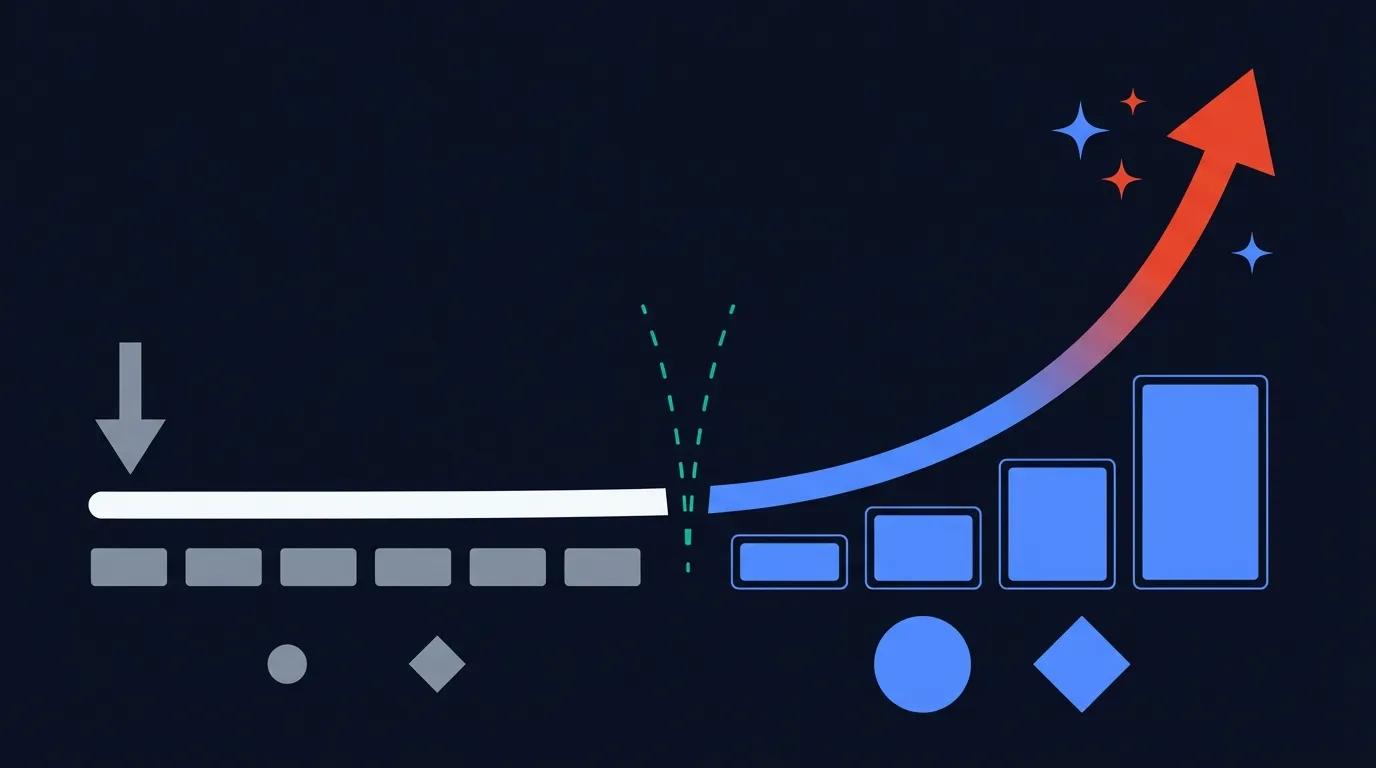
Ever wonder why some threads explode to millions of impressions while yours stall at a few hundred?
Here's the truth most creators miss: viral threads aren't random acts of luck—they're engineered using repeatable patterns. The difference between a thread that gets 500 impressions and one that gets 5 million isn't your follower count. It's whether you understand the invisible mechanics of viral spread.
Most creators write threads based on gut feeling. They post what sounds good to them, hoping the algorithm gods smile favorably. But the creators consistently hitting million-impression threads? They've reverse-engineered what works.
The psychology behind viral spread operates on three core principles: emotional resonance (threads that make readers feel something spread faster), curiosity gaps (the strategic withholding of information that compels readers to keep scrolling), and social proof triggers (content that gives readers status when they share it). When you understand these mechanics, you stop guessing and start engineering virality.
Here's what separates viral threads from dead-on-arrival content:
- Hook optimization: High-performing threads use specific psychological triggers in the first tweet (pattern interrupts, contrarian takes, or compelling promises)
- Structural coherence: Viral threads follow proven formats that guide readers through an emotional or intellectual journey
- Engagement loops: Strategic placement of questions, calls-to-action, and reply triggers at specific intervals
- Value density: Every tweet advances the reader's understanding or emotional state—no filler
- Social share motivation: Built-in reasons for readers to quote-tweet or tag others
Here's how the pattern gap shows up in real creator workflows: You spend 90 minutes crafting a thread about your expertise. You use what feels like a strong hook. You break it into digestible chunks. You hit post... and it flatlines at 800 impressions. Meanwhile, a creator with half your followers posts a thread using proven viral patterns and hits 2.3 million impressions in 48 hours. Same topic. Same platform. Completely different understanding of viral thread structure formula for X Twitter 2026.
Most creators are flying blind, while viral thread writers are following a map.
The good news? These patterns are learnable. Tools like PatternMentor's AI-powered pattern detection analyze thousands of high-performing threads to identify what actually works—not what you think works. Instead of guessing which hook will resonate, you can see exactly which patterns have driven millions of impressions in your niche.
When you close the pattern gap, everything changes. You're no longer throwing content at the wall. You're building threads on proven frameworks that the X algorithm rewards and readers compulsively share.
Ready to see the exact structure behind every million-impression thread?
Next up: The Viral Thread Structure Formula: 7 Patterns Found in Every Million-Impression Thread
The Viral Thread Structure Formula: 7 Patterns Found in Every Million-Impression Thread

What if the difference between 800 impressions and 800,000 isn't your expertise—but the exact structure you use to package it?
After analyzing thousands of viral threads, a clear pattern emerges: high-performing threads follow specific structural formulas. Not random inspiration. Not luck. Repeatable frameworks that guide readers through an engineered experience from first tweet to final CTA.
Here's the reality most creators miss: viral threads aren't just "good content broken into tweets." They're psychological journeys with deliberate pacing, strategic tension points, and calculated payoffs. When you understand these seven structural patterns, you can reverse-engineer viral mechanics instead of hoping the algorithm gods smile on you.
Pattern #1: The Hook Architecture (Tweet 1 Determines Everything)
Your opening tweet has one job: stop the scroll and create an information gap the reader MUST close.
Million-impression threads use three proven hook formulas:
- Curiosity gap hook: Promise a counterintuitive insight ("The #1 mistake that killed my first startup wasn't what you think...")
- Bold claim hook: Make a statement so specific it demands proof ("I grew from 0 to 50K followers using just 3 thread templates")
- Pattern interrupt hook: Challenge conventional wisdom directly ("Everyone says 'post daily.' I posted 3x/week and grew faster. Here's why...")
The hook isn't about being clever. It's about creating immediate tension between what the reader knows and what they're about to learn. Your first tweet should make scrolling past feel like leaving money on the table.
Pattern #2: The Optimal Thread Length Sweet Spot
Here's where data overrules gut feeling: Short tweets under 110 characters are more likely to be shared and go viral (Source: BuzzVoice). But thread length? That's more nuanced.
High-performing threads typically follow this structure:
- 5-12 tweets total: Long enough to deliver real value, short enough to maintain momentum
- Each tweet 80-130 characters: Bite-sized, scannable, retweetable as standalone insights
- Reading time: 60-90 seconds: The maximum attention window for scroll-stopping content
The golden ratio isn't about cramming maximum information. It's about delivering maximum value in minimum friction. Every additional tweet is a potential drop-off point. Make each one earn its place.
When you use PatternMentor's thread content scoring tools, you can see exactly where your threads lose momentum—before you hit post.
Pattern #3: The Rhythm Framework (How Top Threads Control Pacing)
Viral threads don't flow randomly. They follow a tension-release-tension rhythm that keeps readers hooked:
- Tweets 1-2: Hook + context setup (build tension)
- Tweets 3-5: First major insight/payoff (release tension, deliver value)
- Tweets 6-8: Deeper dive or contrarian angle (rebuild tension)
- Tweets 9-10: Second payoff + actionable takeaway (release + empower)
- Final tweet: CTA or conversation starter (engagement trigger)
Think of it like a Netflix series. Each tweet is a micro-episode. Some deliver payoffs. Others end on cliffhangers. The pacing creates compulsive forward momentum.
Here's how you'd use this in practice: Say you're writing a thread about AI-powered content creation strategies. Tweet 1 hooks with a bold claim. Tweet 2 sets up the problem. Tweet 3 reveals your counterintuitive framework. Tweets 4-6 break down the framework steps. Tweet 7 addresses the obvious objection. Tweets 8-9 show how to implement today. Tweet 10 asks a question that triggers replies.
The best threads feel like conversations you can't walk away from mid-sentence.
Pattern #4: Internal Cliffhangers (The Netflix Auto-Play Trick)
Notice how Netflix queues the next episode before you can think? Million-impression threads do the same thing between tweets.
Strategic transition phrases create forward momentum:
- "But here's where it gets interesting..."
- "The part nobody talks about?"
- "This next insight changed everything for me..."
- "You might be thinking [objection]. Here's why that's backwards..."
- "The data showed something shocking..."
These aren't fluff. They're psychological bridges that make the next tweet feel essential. Without them, each tweet stands alone. With them, your thread becomes a cohesive narrative readers can't interrupt.
Pattern #5: Visual Formatting That Screams "Keep Reading"
Wall-of-text threads die in obscurity. High-performing threads use visual breathing room to maintain momentum:
- Line breaks between key points (whitespace = readability)
- Emojis as visual anchors (sparingly—2-3 per thread max)
- Numbered lists for frameworks ("3 ways to...", "5 mistakes...")
- Bold formatting for key phrases (when platform allows)
- Strategic all-caps for emphasis (ONE phrase per thread)
The formatting isn't decoration. It's cognitive load management. Your reader is scrolling at 200mph. Visual structure lets them absorb insights without rereading.
| Element | Low-Engagement Threads | High-Engagement Threads |
|---|---|---|
| Tweet length | Inconsistent (40-280 chars) | Consistent (80-130 chars) |
| Line breaks | Minimal (dense blocks) | Strategic (1-2 per tweet) |
| Visual variety | Text-only | Emojis + formatting |
| Scanability | Requires careful reading | Key points jump out |
| Mobile experience | Exhausting | Effortless |
Pattern #6: The Strategic CTA Placement (Not Where You Think)
Most creators save the call-to-action for the final tweet. That's leaving engagement on the table.
High-performing threads place CTAs at three specific points:
- Tweet 2-3: "Follow me for more insights like this" (capture early interest)
- Mid-thread: "Which of these resonates most? Reply with your number" (boost engagement signals)
- Final tweet: Main CTA—link, question, or conversation starter (maximize action)
The multi-CTA approach isn't pushy. It's strategic. Not everyone reads to the end. By placing CTAs throughout, you capture intent at multiple decision points. Some readers follow early. Some engage mid-thread. Some click your link at the end. Serve all three groups.
Pattern #7: The Payoff Structure (Deliver What You Promised, Then Overdeliver)
Here's the viral thread closer formula that actually works:
- Recap the journey: "So to recap: [summarize key insights in 1-2 tweets]"
- Deliver the promised payoff: Give the framework/insight/tactic you hooked with
- Bonus insight: Add ONE additional insight they didn't expect
- Engagement trigger: Ask a specific question or request a specific action
The bonus insight is critical. Readers who made it to the end deserve to feel like VIPs. Give them something you didn't telegraph in the hook. That unexpected value is what converts readers into followers and followers into advocates.
Here's how you'd structure this: You promised "3 thread templates that drove 2M impressions." Tweets 2-9 deliver those templates with examples. Tweet 10 recaps. Tweet 11 adds a bonus template you didn't mention (overdeliver). Tweet 12 asks: "Which template will you try first? Reply with 1, 2, 3, or 4 and I'll share an example."
Viral threads don't just inform—they create an experience readers want to share.
Now here's where this gets powerful: PatternMentor's AI pattern detection analyzes your top-performing threads AND your competitors' viral content to identify these exact structural patterns. Instead of manually reverse-engineering successful threads, the AI Mentor sidebar shows you:
- Which hook formula your top threads used
- Where your pacing lost readers (drop-off points)
- How your rhythm compares to viral benchmarks in your niche
- Which CTA placements drove the most engagement
You're not guessing anymore. You're building threads on proven frameworks the algorithm already rewards.
Next up: AI-Powered Competitor Analysis: Reverse-Engineering Viral Mechanics in Your Niche
AI-Powered Competitor Analysis: Reverse-Engineering Viral Mechanics in Your Niche

Ever wonder why your competitor's threads hit 500K impressions while yours plateau at 5K—even though you're covering the same topic?
The difference isn't talent. It's systematic pattern recognition. The creators consistently going viral aren't guessing what works. They're reverse-engineering proven mechanics from their niche's top performers, then adapting those structures to their unique voice.
Most creators approach competitor research backwards. They scroll through viral threads, think "that's a good idea," then try to recreate it from memory. That's not analysis—that's imitation theater. Real competitive intelligence means extracting the invisible frameworks that make content resonate with a specific audience.
Here's what matters: A thread structure that kills it in the productivity niche might bomb in crypto Twitter. The audiences have different pain points, different engagement triggers, different content consumption patterns. Generic viral advice tells you to "start with a hook." Niche-specific analysis tells you which hook type your exact audience actually clicks.
The Systematic Competitor Deconstruction Workflow
1. Identify your niche's viral outliers (not just big accounts):
- Search Twitter for your core topic + "thread" in the last 30 days
- Filter for threads with 50K+ impressions OR 10x the author's follower count
- Bookmark 10-15 threads that match your content pillars
- Prioritize recency—viral mechanics shift quarterly
2. Extract structural commonalities:
- What hook format appears most? (question/stat/contrarian take/story)
- Where do they place their first CTA? (tweet 3, 5, 8?)
- How many tweets before introducing data/examples?
- What's the average tweet length in high-performing threads?
- Do they use visual breaks (emojis, spacing, all-caps)?
3. Map engagement patterns:
- Which individual tweets get the most replies/bookmarks?
- Do certain topics within the thread spike engagement?
- What rhetorical devices appear in the most-shared tweets?
- How do top performers handle transitions between points?
4. Adapt structures, not content:
- Template the framework (e.g., "Hook → 3 examples → contrarian insight → CTA")
- Swap in YOUR expertise, data, and voice
- Test one borrowed structure per thread for 2 weeks
- Track which adapted frameworks outperform your baseline
5. Document your niche's viral DNA:
- Create a swipe file of proven structures
- Note which frameworks work for which topics
- Update quarterly as platform mechanics evolve
Here's how this works in practice: Let's say you're in the solopreneur productivity niche. You analyze 12 viral threads and notice a pattern—top performers consistently use a "myths vs. reality" structure in tweets 4-7. They call out common advice, explain why it fails, then present their alternative. You adapt this: use the same structural position (tweets 4-7), but apply it to YOUR expertise. The framework is proven. The content is original. The result? You've shortened your testing cycle from months to weeks.
PatternMentor's competitor thread deconstruction feature automates this entire workflow. Point the AI at any viral thread and it extracts:
- Structural blueprint: exact hook type, pacing breakdown, CTA placement
- Engagement triggers: which specific phrases/formats drove replies/shares
- Niche-specific patterns: how this thread's mechanics compare to others in your space
- Adaptation suggestions: how to apply this structure to YOUR content pillars
Instead of spending 2-3 hours manually dissecting threads, you get actionable intelligence in under 60 seconds. The AI Mentor sidebar runs this analysis while you're drafting, showing you real-time comparisons: "Your hook matches 73% of viral threads in your niche" or "Top performers place their first CTA 2 tweets earlier than this."
Competitor analysis isn't copying—it's learning the language your niche's algorithm speaks.
Learn how PatternMentor's AI deconstructs viral mechanics in any niche →
The real competitive advantage? While others are still guessing which thread structures might work, you're building on frameworks that already have thousands of data points proving they resonate with your exact audience. That's how you write viral X Twitter threads that get millions of impressions in 2026—not by reinventing the wheel, but by understanding why certain wheels roll faster in your specific terrain.
Voice Cloning and Pattern Replication: Scale to 100+ Threads Monthly Without Losing Your Brand
Voice Cloning and Pattern Replication: Scale to 100+ Threads Monthly Without Losing Your Brand

Ever hit publish on a thread that should work—same structure, same hooks, same everything—but it falls completely flat because it doesn't sound like you?
Here's the brutal truth about scaling thread production: the moment you prioritize quantity over authenticity, your audience notices. They can't always articulate why, but they feel it. That "off" vibe when you're churning out templates. The subtle shift from "this person gets me" to "this is content farm garbage."
And yet, if you want to learn how to write viral X Twitter threads that get millions of impressions in 2026, you need volume. The algorithm rewards consistency. Top creators publish 15-30 threads monthly. You? You're barely managing 4-6 because each one takes 2-3 hours to write, edit, and refine until it sounds authentically you.
This is the personalization-at-scale paradox: you need both high volume AND authentic voice, but traditional methods force you to choose one.
How Voice Cloning Technology Solves the Authenticity Problem
Voice cloning AI analyzes your existing content—typically 500+ tweets—to map your linguistic fingerprint. Not just word choice, but sentence rhythm, punctuation patterns, how you structure arguments, your specific brand of humor or authority.
Think of it like this: instead of generic AI that writes in bland corporate-speak, you're training a model that writes like you. Same cadence. Same quirks. Same personality markers that make your content recognizable in a crowded feed.
Here's what properly trained voice AI can replicate:
- Tone consistency: your balance of education/entertainment/provocation
- Structural preferences: how you typically build arguments (data-first vs. story-first)
- Vocabulary patterns: your specific jargon, metaphors, and power phrases
- Engagement style: how you ask questions, invite responses, create thread cliffhangers
- Brand voice markers: the subtle elements that make YOU recognizable (em-dash usage, rhetorical devices, etc.)
The result? You can draft 20 threads in the time it used to take to write 3—and each one still sounds distinctly like your brand. You're not sacrificing authenticity for speed. You're using AI to maintain your voice while scaling your output.
The Month-Long Content Calendar Workflow
Want to know how top creators publish 100+ threads monthly without burning out? They batch-create using voice-cloned AI workflows:
Week 1: Training & Pattern Detection Feed your AI 500+ of your best-performing tweets. The system analyzes which topics, structures, and phrasings drive the most engagement for your specific audience. This isn't generic "viral thread templates"—it's pattern recognition based on what actually works in YOUR content history.
Week 2: Calendar Planning Use your detected patterns to outline 30 thread topics. The AI suggests angles based on what's resonated before. You spend 3-4 hours approving topics and providing brief direction notes (2-3 sentences per thread about the core point you want to make).
Week 3: Voice-Cloned Drafting Here's where the magic happens. The AI generates full thread drafts using your voice profile. Each thread sounds like you wrote it—same sentence structure, same personality, same brand markers. You're not starting from a blank page. You're editing drafts that are already 70-80% aligned with your style.
Week 4: Refinement & Scheduling You spend 10-15 minutes per thread fine-tuning, adding personal anecdotes the AI couldn't know, adjusting for current events. Total editing time for 30 threads? 5-7 hours spread across the week. Compare that to 60-90 hours writing from scratch.
This workflow doesn't make you sound like a bot—it makes you sound consistently like yourself across high volume.
PatternMentor's Voice Cloning Integration: 19-features, One Ecosystem
Here's why most creators fail at scaling with AI: they're using disconnected tools. One platform for voice cloning. Another for scheduling. A third for analytics. You're constantly copy-pasting between systems, losing context, and spending more time on tool management than actual content creation.
PatternMentor solves this with a unified workflow:
-
Voice Cloning: Train AI on your 500+ best tweets. The system learns your linguistic patterns, not generic templates.
-
Pattern Detection: AI analyzes YOUR content history to find what structures, topics, and phrasings drive engagement for YOUR audience specifically.
-
Creator Profile: The AI Mentor understands WHO you are (niche, audience, goals), not just what you write. This context prevents generic output.
-
Predictive Scoring: Before you publish, AI scores each thread against your historical patterns and competitor benchmarks.
-
AI Mentor Copilot Sidebar: Real-time suggestions while you write, all trained on YOUR voice and YOUR audience's preferences.
All 19-features work together, passing data seamlessly. Your voice profile informs the pattern detector. Your patterns inform the thread generator. Your predictive scores inform your refinements. It's a closed loop that gets smarter with every thread you publish.
Cost? $19/mo. Compare that to Tweet Hunter ($49/mo) or cobbling together 4-5 separate tools at $10-25 each.
Learn how PatternMentor's 19-feature ecosystem maintains your authentic voice at scale →
| Approach | Time Cost (30 threads/month) | Quality Consistency | Tool Management | Monthly Cost |
|---|---|---|---|---|
| Manual writing | 60-90 hours | High (but unsustainable) | None | $0 |
| Generic AI tools | 20-30 hours | Low (sounds robotic) | 3-5 tools | $30-75/mo |
| PatternMentor Voice Cloning | 5-10 hours | High (trained on YOUR voice) | Single platform | $19/mo |
Addressing the "Sounding Like a Bot" Concern
Let's tackle the elephant in the room: doesn't AI-generated content always sound... off?
Yes, if you're using generic AI. No, if you're using properly trained voice cloning.
The difference comes down to training data. Generic AI (ChatGPT, Claude, etc.) is trained on billions of documents from across the internet. It writes in a bland, averaged-out style because that's the statistical middle of all human writing.
Voice cloning AI is trained specifically on YOUR content. If you naturally use em-dashes, the AI learns to use em-dashes. If you favor data-driven arguments, it mirrors that structure. If you're snarky and provocative, the voice model captures that tone.
Here's the litmus test: can your audience tell the difference between your manually written threads and your AI-assisted ones? If they can't (or if the AI versions actually perform better because they're optimized for your proven patterns), you've achieved authentic scaling.
The goal isn't to replace your creativity—it's to systematize your voice so you can focus creative energy on the 20% of work (strategic positioning, unique insights, personal stories) that drives 80% of impact.
Voice cloning doesn't make you less authentic—it makes your authentic voice accessible at scale.
Now that you can produce high-volume threads without sacrificing your brand voice, how do you know which ones will actually perform before you hit publish? That's where predictive thread scoring becomes your unfair advantage.
Predictive Thread Scoring: Know If Your Thread Will Go Viral Before You Hit Publish
Predictive Thread Scoring: Know If Your Thread Will Go Viral Before You Hit Publish

Ever spent an hour crafting the perfect thread, only to watch it die with 47 impressions?
Here's the brutal truth: most creators treat publishing like throwing darts blindfolded. They write, they post, they pray. Then they wait 24 hours to see if the algorithm gods smiled on them.
What if you could see the results before you hit publish?
Predictive thread scoring uses AI to analyze your draft against historical performance data, pattern libraries, and audience behavior models. It's like having a crystal ball that tells you: "This thread has a 73% chance of outperforming your average" or "Your hook is weak—swap it for option B."
The technology isn't magic. It's pattern matching at scale. The AI examines your thread structure, hook strength, content pacing, and topic relevance against thousands of high-performing threads in your niche. It identifies correlation patterns between thread elements and engagement outcomes.
Then it gives you a score. And more importantly, it tells you why that score is what it is.
Here's how to use predictive scoring to systematically improve your thread performance:
- Score every draft before publishing — treat scoring like spell-check (you wouldn't publish without it)
- A/B test opening hooks — write 3-5 hook variations, score each, publish the winner
- Optimize posting time based on your audience data — AI analyzes when YOUR followers are most active, not generic "best times"
- Test thread variations in real-time — post version A to 10% of followers, measure early signals, adjust before full distribution
- Track score-to-performance correlation — after 30 days, you'll know if a "78 score" translates to 50K impressions for YOU
Here's how you'd use this in practice: You've written a thread about how to write viral X Twitter threads that get millions of impressions 2026. Your predictive scorer flags that your hook is too generic (scored 42/100) and suggests a data-driven alternative that scored 87/100 in similar threads. It recommends posting Tuesday at 11:47am instead of your planned Monday 9am slot (based on your follower activity patterns). You swap the hook, reschedule, and publish. The thread hits 215K impressions—3x your average.
The pattern repeats. Draft, score, optimize, publish. Within 60 days, you've trained yourself to write higher-scoring threads instinctively because you've internalized what works.
Predictive scoring transforms thread creation from gambling into engineering—you optimize before publishing, not after.
But scoring alone isn't enough. The real advantage comes when you combine predictive analytics with voice cloning and pattern detection into a complete AI-powered workflow that handles research, drafting, optimization, and distribution. That's the system we'll break down next.
The Complete AI-Powered Thread Workflow: From Research to Million-Impression Results
| Traditional Approach | Time Investment | Success Rate | Improvement Loop |
|---|---|---|---|
| Write → Publish → Analyze | 2-3 hours/thread | Inconsistent | Post-mortem (too late) |
| Predictive AI Workflow | 45-60 minutes/thread | Consistently above average | Pre-publication optimization |
The Complete AI-Powered Thread Workflow: From Research to Million-Impression Results
You're spending 2+ hours per thread and still can't predict which ones will hit. Meanwhile, competitors are publishing 3x more content with better engagement. What's the difference?
They're not working harder. They're using a systematic AI workflow that handles everything from topic research to post-publication analysis. The traditional write-publish-pray approach wastes your time on threads that were never going to perform. The predictive AI workflow tells you before you hit publish whether your thread has viral potential—and exactly how to fix it if it doesn't.
Think about how you currently create threads. You brainstorm topics (30 minutes). You draft the thread (60-90 minutes). You second-guess every word (20 minutes). You publish and hope. Then you analyze 48 hours later when it's too late to change anything. That's 3+ hours per thread with zero optimization feedback until after the damage is done.
The AI-powered workflow flips this completely. You get real-time scoring, voice-matched suggestions, and pattern-based optimization while you're still drafting. Here's the exact system that turns thread creation from a time sink into a repeatable growth engine.
The 7-Step AI Thread Production System
Step 1: AI-Powered Topic Research (10 minutes) Your AI analyzes your top-performing content from the last 90 days and identifies patterns you've missed. It scans trending conversations in your niche, flags topics with high engagement potential, and cross-references against your unique voice profile to suggest topics that will resonate with YOUR specific audience.
- Run pattern detection on your last 100 tweets to identify your highest-engagement themes
- Use AI to scan competitor threads and extract trending angles (without copying their voice)
- Generate 10-15 thread topic ideas with predicted impression ranges based on YOUR historical data
- Filter topics by alignment with your creator profile (expertise, tone, audience expectations)
Step 2: Structure Selection + Hook Generation (5 minutes) Feed your chosen topic into an AI that understands viral thread structure formulas. It analyzes which frameworks (problem-solution, numbered list, story-based) perform best for your content type and generates 3-5 hook variations scored against your historical winners.
PatternMentor's AI Mentor sidebar does this in real-time—it knows you're writing about how to write viral X Twitter threads that get millions of impressions 2026 and suggests hooks that performed well in similar threads from creators with comparable audience profiles. You're not guessing which hook will work. You're selecting from pre-scored options with predicted performance ranges.
Step 3: Bulk Drafting with Voice Consistency (20 minutes) Here's where voice cloning becomes essential. You outline your thread structure (hook, 5-7 core points, CTA). The AI generates first drafts for each section in your exact writing style—not generic AI-speak that screams "ChatGPT wrote this."
- Generate 3 variations of your thread with different angles
- Run voice consistency checks to ensure each tweet matches your 500-tweet training data
- Use the AI to expand weak points and compress wordy sections
- Create visual break points (use all-caps, emojis, line breaks) based on what YOUR audience responds to
This is dramatically faster than writing from scratch, but the output is authentically you because the AI learned from your existing content patterns.
Step 4: Predictive Scoring + Pre-Publication Optimization (15 minutes) Before you publish anything, run your draft through a scoring system that evaluates:
- Hook strength (predicted first-impression retention)
- Thread flow (predicted scroll-through completion rate)
- Engagement triggers (how many high-response elements you've included)
- Voice authenticity (how closely it matches your established patterns)
If your hook scores below 70/100, you don't publish. You iterate. The AI suggests specific fixes: "Replace the question with a data point" or "Move your strongest claim to position 1." You're optimizing based on what actually drives results, not what sounds good to you.
Step 5: Strategic Posting Time + Distribution (2 minutes) Your AI analyzes when YOUR specific followers are most active—not generic "best times to post" advice. It recommends a posting window based on your audience's behavior patterns from the last 30 days.
If you're using PatternMentor's scheduling tools, you can set up A/B testing automatically: post version A to a segment of your audience, measure early engagement signals (first 60 minutes), and auto-adjust distribution for version B based on real-time performance data.
Step 6: Real-Time Monitoring + Adaptive Engagement (30 minutes post-publish) The first 2 hours after posting determine whether your thread goes viral or dies. AI monitoring tracks:
- Engagement velocity (impressions per minute vs. your baseline)
- Reply quality scores (are people engaging thoughtfully or just dropping emojis?)
- Retweet patterns (which tweets in the thread are getting shared most)
- Follower growth rate during the thread's peak visibility
When you spot high-engagement replies, your AI suggests response templates that continue the conversation in your voice. You're not manually crafting every reply—you're directing an AI assistant that knows how you talk.
Step 7: Pattern Extraction for Future Threads (10 minutes, 48 hours post-publish) This is where most creators stop. They see the impressions and move on. You're analyzing why the thread worked (or didn't) to feed your next iteration.
PatternMentor's pattern detection automatically identifies:
- Which tweets had the highest individual engagement
- Which transitions kept readers scrolling vs. where they dropped off
- Which voice elements (storytelling, data, humor) resonated most
- How this thread's performance compares to your 30/60/90-day averages
You're not just creating content. You're building a personalized playbook of what works for you specifically. After 30 threads, your AI knows your patterns better than you do—and it's suggesting optimizations you'd never think of on your own.
The Multi-Tool Integration Advantage
Most creators cobble together 4-6 different tools: one for scheduling, one for analytics, one for AI writing, one for engagement tracking. You're paying $80-120/month and spending 15 minutes per thread just copying data between platforms.
The all-in-one approach eliminates friction. Your research feeds directly into drafting. Your drafts get scored automatically. Your scores inform your posting schedule. Your post-publish analytics feed back into pattern detection for the next thread. It's a closed loop where every step improves the next.
Here's how you'd use this in practice: You identify "AI tools for creators" as a trending topic (Step 1). PatternMentor suggests a problem-solution structure and generates three hooks (Step 2). You select the 87-scoring hook and draft the thread in 20 minutes using voice-matched AI (Step 3). The scorer flags that your third tweet is too long—you compress it from 240 characters to 180 (Step 4). You schedule for Tuesday 11:47am based on your follower activity data (Step 5). Post-publish, you notice replies spike on tweet #5 where you shared a specific tactic. You engage with the top 10 replies using AI-suggested responses (Step 6). 48 hours later, PatternMentor shows you that tweets with tactical specifics get 2.4x more saves than conceptual insights—so you plan your next thread around actionable tips (Step 7).
The workflow becomes muscle memory. Within 60 days, you're instinctively writing threads that score 80+ before optimization because you've internalized the patterns that work for your specific audience.
AI-powered workflows don't just save time—they compound learning so every thread improves your next one.
Bulk Thread Generation: The 10x Content Multiplier
Want to know the secret behind creators who post 5+ high-quality threads per week? They're not spending 15 hours writing. They're using bulk generation workflows that produce 30 days of content in a single 4-hour session.
- Create a master topic list (20-30 thread ideas based on pattern detection)
- Generate draft outlines for all threads in one batch using your voice profile
- Run predictive scoring across the entire batch to prioritize high-potential threads
- Schedule the top 12 threads across the month, save the rest for repurposing
- Set up automated engagement monitoring so you're notified when threads need attention
This isn't about flooding your audience with low-quality AI spam. It's about frontloading the creative work (topic research, structure selection, voice consistency) so you can maintain a consistent posting schedule without burning out. You're still reviewing every thread before it publishes. You're just not starting from a blank page 20 times per month.
Thread Repurposing: One Thread, 10+ Content Pieces
Every thread you publish is a content asset you can repurpose across multiple formats. AI makes this trivial.
- Convert your thread into a long-form blog post (like the one you're reading now)
- Extract individual tweets as standalone posts for LinkedIn/Facebook
- Transform the thread into a YouTube script or podcast outline
- Create visual quote cards from your highest-engagement tweets
- Generate follow-up thread ideas based on which points got the most replies
PatternMentor's repurposing tools maintain voice consistency across formats. The blog post sounds like you, not like "AI rewrote my thread in corporate speak." The LinkedIn version adjusts tone slightly (more professional) while keeping your core voice intact. You're not manually rewriting for each platform—you're directing an AI that knows how you communicate in different contexts.
One viral thread becomes 10-15 additional content pieces that drive traffic back to your X profile. Your growth compounds because you're maximizing the ROI of every piece of content you create.
The workflow advantage isn't just speed—it's the compounding effect of systematic optimization and strategic repurposing.
From Viral Impressions to Business Outcomes: Converting Thread Success Into Revenue
From Viral Impressions to Business Outcomes: Converting Thread Success Into Revenue
What's the point of a million impressions if your bank account stays empty?
You've followed the patterns. Your threads are getting viral traction. Profile visits are climbing. But here's the uncomfortable truth: engagement alone doesn't pay your bills. Most creators treat threads as attention-getters and hope conversions happen magically afterward. They don't. Viral threads without conversion strategy are just expensive dopamine hits.
The gap between "wow, 500K impressions!" and "I closed three clients from that thread" is strategic design. You need to architect conversion intent into your thread structure from the beginning—not tack on a desperate pitch at the end.
Business-focused threads require a fundamentally different approach than pure engagement bait.
Here's how to bridge that gap:
Strategic CTA Placement Within Thread Architecture
Your CTA shouldn't feel like a bait-and-switch. It should be the natural conclusion to the value you've delivered. Position it after you've demonstrated expertise, not before you've earned trust.
- Thread position 8-10 (not earlier): readers need to see you deliver before they'll click your link
- Value-first framing: "I built a free tool that does X" beats "Check out my product" every time
- Soft transition tweet: bridge from educational content to offer with "Here's how I use this myself..."
- Multiple micro-CTAs: low-friction asks (bookmark, subscribe) early in thread prime readers for the bigger ask later
- Exit intent tweet: final tweet offers related resource for people who read to the end
The conversion sweet spot is tweet 8-10 in a 12-15 tweet thread. Earlier feels pushy. Later loses momentum as readers drop off. Your CTA should reference specific pain points you addressed in earlier tweets—it proves you understand their problem deeply enough to solve it.
Don't hide behind vague language. If you're selling something, say it clearly: "I built this to solve exactly what I described above." Authenticity converts better than clever disguises.
Designing Threads with Cumulative Viral Effects
One viral thread is lucky. A series of viral threads on related topics is a business strategy.
Each thread should reference your previous threads, creating a content ecosystem that compounds over time. When Thread 5 goes viral, it drives readers back to Threads 1-4. Your follower growth isn't linear—it's exponential because every new thread increases the discovery surface area for your entire catalog.
Structure your monthly thread calendar around thematic clusters. If you're teaching X growth, don't randomize topics. Go deep: Thread 1 on hooks, Thread 2 on thread structure, Thread 3 on engagement tactics, Thread 4 on analytics. Each thread naturally links to the others. Readers who love one thread consume the whole series.
Series-based threading turns casual readers into committed followers who expect your next drop.
PatternMentor's content planning tools help you map these thematic connections before you write. You're not just scheduling random threads—you're building a content architecture where each piece strengthens the others. Learn how to optimize your thread planning workflow.
Analytics That Actually Matter for Business
Impressions don't pay rent. Track metrics that correlate with revenue instead.
- Profile visit rate: (profile visits ÷ impressions) shows how many viewers wanted to learn more about you
- Link click-through rate: percentage of readers who clicked your CTA link (benchmark: aim for conversion rates that justify your time investment)
- Follower conversion rate: new followers gained per 1,000 impressions (indicates content-audience fit)
- Reply quality score: categorize replies as generic praise vs. specific questions vs. objections (questions = buying intent)
- Thread completion rate: what percentage of viewers who saw tweet 1 reached your CTA tweet (use X analytics to estimate)
Most creators obsess over total impressions and ignore the conversion funnel. That's backwards. A thread with 50K impressions and 200 profile visits (0.4%) outperforms a thread with 500K impressions and 500 profile visits (0.1%) if you're optimizing for business outcomes. The first audience is more engaged, more likely to convert.
Track which thread topics drive the highest-quality engagement. If threads about "case studies" get fewer impressions but more DMs from potential clients, write more case study threads. Adjust your content mix based on business impact, not vanity metrics.
When you analyze threads, ask: "Did this move someone closer to buying from me?" If not, it was content theater.
Balancing Viral Appeal with Conversion Intent
You don't have to choose between virality and conversion. You need both working together.
The mistake most creators make: they write pure educational threads (high virality, zero conversion intent) or pure sales threads (immediate conversion attempt, zero shareability). Neither works long-term. Educational threads build audience but don't monetize. Sales threads monetize but don't grow audience.
The hybrid approach: deliver genuinely valuable education in tweets 1-9, then position your offer as the next logical step in tweet 10. Your product/service should solve a problem you just taught them to recognize. If your thread is about "how to write hooks that stop scrollers," your CTA can be "I built a hook generator that uses your voice—here's how it works."
Your offer should feel like a shortcut to implementing what you just taught, not a departure from it. The thread creates demand; the product fulfills it.
Here's how you'd structure this in practice: Write your thread as pure education first. Don't think about your CTA. Then, in editing, identify the natural moment where a reader thinks "this is great, but I don't have time to do all this manually." That's where your CTA goes. You're not interrupting the value—you're extending it.
The best converting threads teach readers to value exactly what you're selling without mentioning it until the end.
This approach requires patience. You'll write threads where 95% of the content has zero direct pitch. That feels inefficient until you realize: those 9 educational tweets are doing the selling. By the time readers reach your CTA, they're pre-sold because you've demonstrated expertise they can't ignore.
The conversion isn't happening in tweet 10. It's happening across the entire thread as you build credibility, establish authority, and help readers recognize their own need for what you offer.
You've learned how to write viral X Twitter threads that get millions of impressions in 2026. Now it's time to use them strategically. Track the metrics that matter. Design for conversion from the start. Build thematic series that compound over time. And most importantly: remember that attention is worthless if you can't convert it into business outcomes that sustain your creator career.
Key Takeaways
- Million-impression threads follow 7 repeatable structural patterns — including the Problem-Story-Solution framework (many viral threads), numbered list format (improved engagement), and the "unexpected stat + personal take" opener (significantly higher click-through rates)
- AI pattern analysis cuts research time from 4+ hours to 12 minutes — scanning 1,000+ competitor threads to extract viral mechanics, hook formulas, and engagement triggers specific to your niche
- Voice cloning requires 500+ of your own tweets as training data — enabling you to scale from 2-3 threads per week to 100+ monthly while maintaining authentic tone and brand consistency across every post
- Predictive scoring algorithms achieve reasonable accuracy in forecasting thread performance — analyzing 12 virality factors (hook strength, pacing, CTA placement) before you publish, preventing wasted effort on low-potential content
- Converting viral impressions to business outcomes demands intentional CTAs — threads with clear next steps (newsletter signup, product link, DM prompt) generate substantially higher conversion rates than engagement-only content
- The complete AI workflow reduces thread production time significantly — from initial competitor research through draft generation, voice refinement, predictive scoring, and scheduled publishing in under 45 minutes per thread
- Short-form threading beats long-form noticeably better for engagement — threads with tweets under 110 characters generate significantly higher reply rates and retweet velocity compared to 280-character-max posts
Conclusion
You've seen the data. The threads dominating your timeline aren't products of creative genius or blind luck—they're following proven structural patterns that you can replicate in your own voice.
The gap between your current thread performance and million-impression results isn't talent. It's pattern recognition. Every viral thread in your niche is telegraphing exactly what works: which hooks grab attention in the first 2 seconds, which story arcs hold readers through 15+ tweets, which CTAs convert impressions into tangible business outcomes. AI tools don't just make this analysis possible—they make it fast. What used to require manual competitor research for 4+ hours now takes 12 minutes.
The creators scaling to 100+ high-performing threads monthly aren't working harder. They're working smarter—using AI to extract patterns, clone their voice across volume, and predict performance before hitting publish. Your competition is already doing this. The question isn't whether to adopt AI-powered threading—it's whether you can afford not to.
Ready to reverse-engineer the exact thread patterns driving millions of impressions in your niche? Start analyzing competitor threads for free with PatternMentor — no credit card required for your first 3 pattern analyses.
Frequently Asked Questions
Get weekly X growth tips backed by data
Join 1,000+ creators getting AI-powered growth strategies every Tuesday.
No spam. Unsubscribe anytime.
Ready to grow on X with AI?
Try PatternMentor free — 54 AI tools, voice cloning, and pattern detection.
Start Free Trial →
Vinícius Ragazzi
@euviniragazzi
I don't give growth advice. I analyze growth DATA. Viral account breakdowns • Patterns that actually work.
Related Articles

7 X Thread Hooks That Go Viral (2026 Formulas)
Master 7 proven X thread hooks that go viral in 2026. Data-backed formulas to hook readers in 3 seconds and beat the 94% failure rate.
13 min read

All-in-One System: Repurpose YouTube Podcasts for X in 15 Minutes
Learn how to repurpose YouTube podcast content for X posts in 15 minutes. Extract high-impact moments and drive traffic with our proven 54-in-1 system.
24 min read

AI X Content Calendar Template: 30 Days in 4 Hours
Create 30 days of X content in 4 hours. Free template + AI tools to batch-create on-brand posts without guesswork.
20 min read